
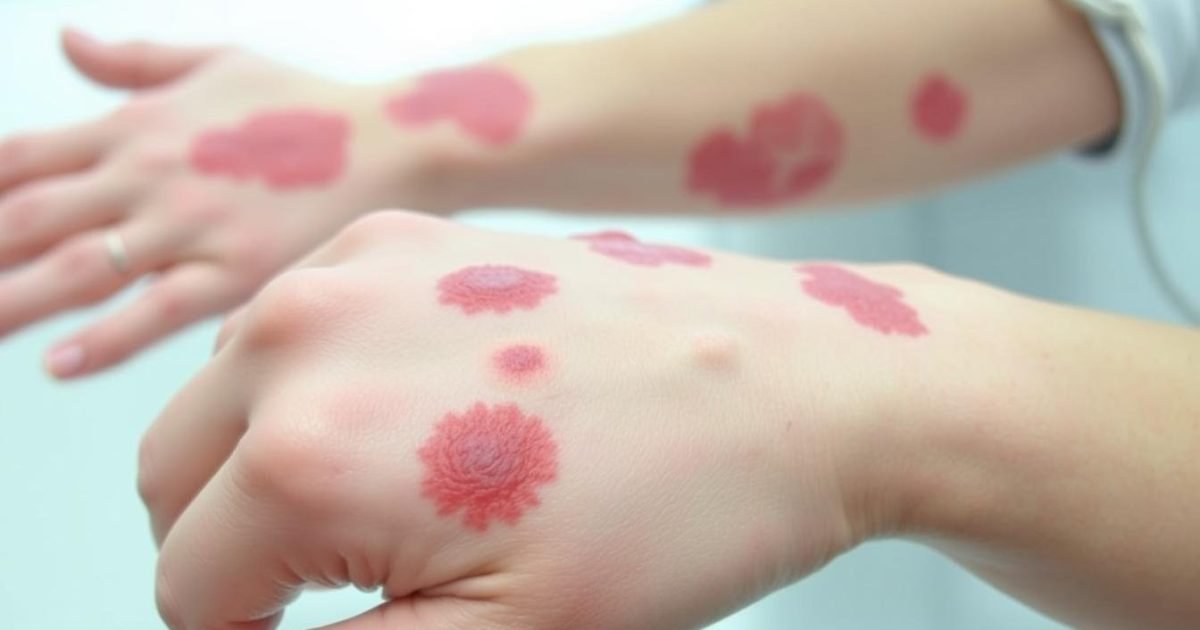
What if the “dry winter hands” you’ve been treating for years aren’t dry at all? But a rare genetic cycle that flares, peels, and returns with the cold?
Keratolytic Winter Erythema is a rare, inherited winter skin condition. It targets the palms and soles. It surges in waves of redness and peeling, then settles, only to recur.
Also known as erythrokeratolysis hiemalis and “Oudtshoorn disease,” it can range from mild to disruptive. It affects different ages and seasons.
Scientists have traced its roots to duplicated enhancer elements upstream of the cathepsin B (CTSB) gene on chromosome 8. This boosts CTSB activity in the stratum granulosum, setting the stage for cyclic shedding.
Histology often shows degenerative changes in the Malpighian layer. It also shows loss and later return of the stratum granulosum, parakeratosis, a keratolytic split, and outward “ejection” of damaged layers.
Recent genetics work led by researchers including Thandiswa Ngcungcu points to precision insights. These insights may guide care. Expert voices such as Dr. Brandon Colby highlight how genetic testing can clarify risk. It supports managing winter erythema with tailored plans.
In the United States, complex cases benefit from multidisciplinary clinics. These clinics are at academic and children’s hospitals. Dermatology, genetics, and pathology teams align diagnosis with practical steps for managing winter erythema at home and through clinic-based care.
Key Takeaways
- Keratolytic Winter Erythema is a rare autosomal dominant keratoderma with cyclical redness and peeling of palms and soles.
- Cold seasons often worsen symptoms, making it a recognizable winter skin condition.
- Genetic changes near the CTSB gene drive abnormal skin turnover in the stratum granulosum.
- Histology features include parakeratosis and a characteristic keratolytic split.
- Early recognition and managing winter erythema with targeted moisturizers and trigger control can reduce flares.
- Genetic counseling and testing can inform personalized care and family planning.
- Specialty centers in the U.S. offer coordinated evaluation and access to research-based treatments.
What is Keratolytic Winter Erythema?
Keratolytic Winter Erythema is a skin issue that happens in cold, dry weather. It gets better when it’s warmer. Knowing about it helps us take better care of our skin in winter.
Definition of Keratolytic Winter Erythema
Keratolytic Winter Erythema is a rare skin condition. It affects the palms and soles. It causes redness and peeling, which happens in cycles.
It gets worse in cold weather. This makes it a winter skin problem. Taking care of our skin is important during this time.
Even in the same family, people can show different signs. Early signs show damage in the skin’s top layer. This damage leads to peeling, which is a key part of the condition.
- Pattern: recurrent flares with peeling after redness
- Sites: palms and soles are most affected
- Seasonality: winter aggravation, summer improvement in some regions
Brief History of the Condition
The condition was first found in South Africa in the 1970s. Dermatologists like Ian Findlay and James Morrison studied it. It was known as “Oudtshoorn skin.”
Genetic studies in 1997 found the cause. In 2017, researchers found a specific gene that causes the condition. This helps us understand and treat it better.
Symptoms of Keratolytic Winter Erythema
Knowing what to look for helps with early action. The symptoms of Keratolytic Winter Erythema often flare when temperatures drop. So, thoughtful cold weather skin care becomes part of everyday planning. Staying observant supports managing winter erythema with less stress.
Common Signs and Symptoms
Most people notice red patches on the palms and soles that soon turn thick and scaly. Shallow blisters may form, followed by peeling that tends to stop at skin creases. The rash can move slowly outward in rings or curves on the hands, feet, or other extremities.
Episodes often cycle every six to eight weeks. Many report extra sweating of the palms and soles with a noticeable odor. Discomfort is usually mild, yet the visible changes can be upsetting. Practical cold weather skin care and simple habits for managing winter erythema can ease daily life.
- Look for: erythematous palmoplantar patches, hyperkeratosis, superficial blisters
- Pattern: centrifugal peeling that pauses at creases; gyrate or annular shapes
- Rhythm: recurrent flares at regular intervals
- Associated signs: palmoplantar sweating and odor
Variations in Presentation
Onset often occurs in early childhood, with the most intense cases starting in infancy. Some people have short winter flares; others experience year-round activity. In more widespread patterns, lesions may extend to the backs of the hands and feet, the lower legs, or the knees. Buttock or thigh involvement is less common.
Cold months, fever, and stress can trigger worsening. Some individuals see improvement during pregnancy and after age 30. Because flares are visible, social and work settings can feel challenging—another reason why managing winter erythema and consistent cold weather skin care matter for comfort and confidence.
Causes of Keratolytic Winter Erythema
This winter skin condition comes from biology and environment. Knowing what causes it helps us make better choices. It also supports effective treatment during cold months.
Genetic Factors
Studies show a link to a gene on chromosome 8. This gene makes more cathepsin B in the skin. Over time, researchers found two big duplications in this gene.
The condition runs in families and is very common. Many cases come from a single ancestor in South Africa. Knowing this helps us treat it better.
Environmental Triggers
Cold, dry air makes it worse. It can also get worse after being sick or stressed.
Where you live and the season affect it too. Knowing this helps us treat it sooner when it’s cold or stressful.
Associated Conditions
This condition is different from eczema or psoriasis. It often comes with sweating and bad smell. This makes it harder to feel comfortable.
Controlling sweat and smell helps a lot. Adding this to early treatment makes life easier. It matches what we know about this condition.
Diagnosis of Keratolytic Winter Erythema
Diagnosing Keratolytic Winter Erythema starts with noticing patterns. Look at how the rash changes over time and where it shows up. It also helps to know if it runs in your family.
Clinical Examination Process
Dermatologists check when the rash started, often before age 5. They also ask about any smells or sweating during flare-ups. They look at how the rash spreads and peels.
They also consider when the rash gets worse, usually in winter. Knowing your family history can help confirm the diagnosis.
- Sites: palms and soles, with centrifugal peeling zones
- Timing: winter flares, partial summer remission
- Course: recurrent episodes with variable intensity
If everything matches, doctors will talk about how to manage it. They might also suggest tests to confirm the diagnosis.
Diagnostic Tests Used
A skin biopsy can help confirm Keratolytic Winter Erythema. Early signs include changes in the skin’s top layer. As it gets worse, the skin’s layers start to look more normal again.
Genetic tests can find a specific genetic change linked to the condition. This helps doctors understand the condition better and plan care for future generations.
- Histopathology: stage-specific epidermal changes
- Molecular: targeted assays for CTSB regulatory duplication
- Care pathway: second opinions at academic centers such as Mayo Clinic, Cleveland Clinic, or Boston Children’s Hospital for complex pediatric cases
Working together, doctors can create a detailed care plan. This helps manage Keratolytic Winter Erythema effectively.
Treatment Options for Keratolytic Winter Erythema
Care focuses on easing scale, calming redness, and protecting the barrier. A balanced plan blends keratolytic treatment with gentle erythema remedies. It also manages winter erythema through practical daily habits.
Topical Treatments
Topicals lead the way. Emollients seal in moisture and soften peeling skin. Occlusive creams reduce water loss after cleansing and before bed.
- Softening agents: Urea 10–20%, lactic acid 5–12%, and salicylic acid 2–6% help lift compact scale without harsh scrubbing.
- Barrier support: Petrolatum-based moisturizers and ceramide-rich creams recondition the stratum corneum during active cycles.
- Application rhythm: Twice daily, then up to three times during cold snaps, aligns with keratolytic treatment goals.
For sensitive areas, spot-apply low-strength acids and follow with an emollient layer. This staged approach serves as targeted erythema remedies without over-irritation.
Systemic Therapies
No single systemic drug is standard. Because inflammation is limited, immunosuppressants used in psoriasis or eczema are rarely a first choice.
- Adjunctive options: Short courses of oral retinoids are sometimes considered by dermatologists for severe hyperkeratosis, with lab monitoring.
- Research horizon: Future strategies may explore pathways influencing protease activity in the stratum granulosum, complementing topical keratolytic treatment.
When symptoms are complex, referral to academic centers can align care with evolving science and individualized erythema remedies.
Lifestyle Adjustments
Daily habits shape outcomes, managing winter erythema. Plan ahead for colder months to stay ahead of flares.
- Cold-weather strategy: Wear cotton liners with insulated gloves or socks; avoid sudden temperature shifts; use room humidifiers.
- Moisturization “intensives”: Begin 6–8 weeks before expected cycles with thicker night creams and morning reapplication.
- Health maintenance: Manage stress, hydrate well, and seek prompt care during febrile illness to limit triggers.
Track routines and responses in a simple log. This helps tune erythema remedies and keeps keratolytic treatment consistent through the season. It manages winter erythema with fewer setbacks.
Role of Moisturizers in Treatment
Moisturizers protect fragile skin during flare-ups. In keratolytic winter erythema, the skin barrier gets thinner and then thicker again. Good winter skin care helps with this cycle. It also makes daily tasks easier.
Importance of Hydration
Keeping the skin hydrated is key when it starts peeling. Humectants pull in water, emollients smooth out rough spots, and occlusives keep moisture in. Together, they prevent cracks and reduce irritation.
Make hydration a part of your routine. Pat dry after a warm bath or shower. Then, apply products within three minutes. This is good for winter skin care.
- Morning: start with a humectant, then seal with an occlusive on high-friction spots.
- Evening: do the same, and consider wearing cotton gloves or socks at night.
- During flares: apply more often but gently; avoid rubbing blisters.
Recommended Products
Look for products that soften thick skin but protect it too. Always test new products on sensitive areas first.
- High-urea creams (20–40%): great for thick skin; attracts water and breaks down keratin.
- Lactic acid lotions (5–12%): gentle and moisturizing; good for texture.
- Salicylic acid (up to 6%): for stubborn spots; use with care.
- Petrolatum-based occlusives (e.g., Vaseline): keeps moisture in and protects.
- Ceramide-rich moisturizers (e.g., CeraVe, La Roche-Posay Lipikar): strengthens the skin barrier.
For seasonal erythema, start with a urea or lactic acid humectant. Then, add an occlusive. This simple routine works well for winter skin care.
Preventive Measures
Small, steady changes can help prevent flare-ups. They make caring for your skin in cold weather easier. These steps are key for keeping your skin strong and planning your routine.
Avoiding Triggers
Use insulated gloves and moisture-wicking socks to keep your skin dry. Plan ahead for the 6–8-week cycle. This way, you can adjust early, not late.
When you get a fever, treat it quickly and rest. Stress management is also important. Try to sleep well, take short breaks, and do light exercise.
For more tips, see this guide on erythema prevention and care. These habits help manage winter erythema without changing your whole routine.
Seasonal Skin Care Tips
In winter, use more emollients and add an occlusive at night. Keep indoor humidity moderate. Use gentle, fragrance-free cleansers and avoid hot showers.
At the first sign of redness, increase your care. This is part of smart cold weather skin care. During peeling, avoid friction and choose breathable shoes.
In summer, you might find your skin easier to care for. Keep your routine light but be ready for stress-related flares. These steps, along with sun-smart habits, nutrient-rich food, and good sleep, help manage winter erythema over time.
Prognosis of Keratolytic Winter Erythema
Keratolytic Winter Erythema is a skin condition that comes and goes. It’s linked to genetics and can vary in severity. People often manage it by adjusting their care as the seasons change.
Long-term Outlook
This condition can last a lifetime, with ups and downs. Some people have milder episodes during pregnancy or after 30. Others may have symptoms all year, or just in the cold months.
When it’s not flaring up, the skin can heal itself. This is why good care routines can help keep the skin comfortable for a long time. Knowing about the genetic cause also helps with planning families.
- Pattern: seasonal, intermittent, or persistent
- Driver: cold, dryness, friction, and sweating
- Care focus: barrier repair, trigger control, follow-up
Impact on Quality of Life
Visible peeling, odor, and sweating can affect daily life, more so in winter. Learning about the genetic cause helps reduce stigma and makes explaining the condition easier.
Working with a team of doctors, including dermatologists and geneticists, can lead to a quicker diagnosis. This team also helps find new treatments for this condition.
| Dimension | Typical Challenge | Helpful Approach | Why It Matters |
|---|---|---|---|
| Seasonality | Flares peak in cold, dry air | Humidification, emollients, and layered clothing | Supports barrier recovery and reduces triggers |
| Symptoms | Peeling, odor, sweat-linked maceration | Antiperspirants, keratolytics, gentle cleansers | Improves comfort when managing winter erythema |
| Work & Daily Tasks | Grip and dexterity issues from scaling | Frequent moisturizing breaks; protective gloves | Maintains function during flares |
| Social Well-being | Self-consciousness in public settings | Education about the prognosis of Keratolytic Winter Erythema | Reduces stigma and supports openness |
| Family Planning | Hereditary concerns | Counseling on CTSB enhancer duplication | Informs relatives and guides decisions |
| Care Network | Delayed diagnosis and uncertainty | Dermatology and genetics referrals; research registries | Builds long-term strategy and access to advances |
Research and Advances in Treatment
Science is changing how doctors treat this winter skin problem. New discoveries in genetics and lab tools are helping. This means better diagnosis and care for Keratolytic Winter Erythema.
Current Studies
For years, scientists have been studying this condition. They found a key part of the problem on chromosome 8p22–p23. Early work by Starfield and others in 1997 helped start this research.
Later, Appel and team in 2002 made more precise findings. Then, Hobbs and colleagues in 2012 looked at genes CTSB and FDFT1. They found that the problem might not be in the genes themselves, but how they are controlled.
Nokuthula Ngcungcu and team in 2017 found something important. They found duplicated enhancer segments near CTSB that match the condition in families. These segments make more CTSB in the skin’s top layer.
Hans Oti and others in 2016 showed how these enhancers work. They found that how these enhancers are arranged controls CTSB expression.
- Key signal: Enhancer duplication linked to CTSB upregulation in keratinocytes
- Clinical angle: Expression changes may explain flare patterns in a winter dermatological condition
- Takeaway for readers: research on Keratolytic Winter Erythema is moving from gene hunting to mechanism mapping
Future Directions in Research
Researchers are exploring ways to lower CTSB in skin cells. They are looking at topical treatments and ways to control enhancers. These ideas could lead to better treatments for erythema.
Future studies might look at how cold, humidity, stress, and infections affect symptoms. Finding biomarkers could help predict when symptoms will flare up. Places like academic medical centers and children’s hospitals are ready to start trials and improve diagnosis.
- Therapeutic concept: keratinocyte-focused CTSB suppression
- Study need: long-term monitoring to define triggers and trajectories
- Clinical pathway: referral to research hubs when investigational care is available
By combining basic science with real-world care, we can better understand Keratolytic Winter Erythema. This will help create treatments that really work for this condition.
Keratolytic Winter Erythema vs. Other Skin Conditions
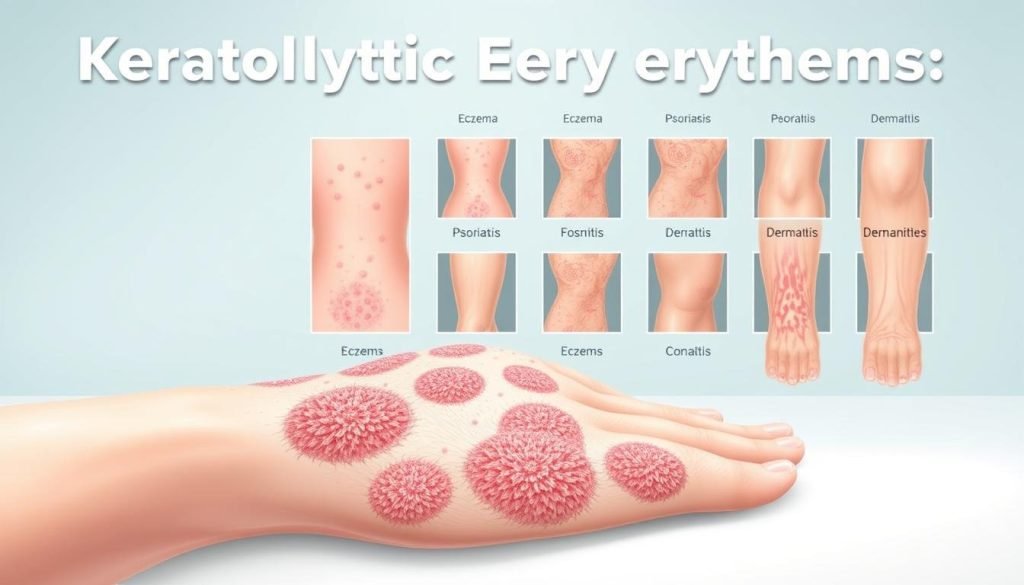
This winter skin condition can look like several rashes at first glance. Careful pattern recognition helps with Keratolytic Winter Erythema vs psoriasis and a clear distinction from eczema, reducing delays in care. Think seasonality, body site, and how the skin peels over days.
Comparison with Psoriasis
Psoriasis often builds thick, well-defined plaques with silvery scale on elbows, knees, scalp, and trunk. Nails may pit, and joints can ache in psoriatic arthritis. The process is chronic and inflammatory.
Keratolytic Winter Erythema tends to cycle on palms and soles, specially in cold months. It starts with redness, then shallow blisters, then centrifugal peeling. In Keratolytic Winter Erythema vs psoriasis, scaling in psoriasis feels fixed and raised, while KWE peeling lifts like a ring that expands outward.
- Location: psoriasis favors extensor sites; KWE is palmoplantar.
- Texture: psoriasis plaques are firm; KWE has fragile blisters with soft peel.
- Course: psoriasis persists; KWE waxes and wanes with weather.
Under the microscope, psoriasis shows acanthosis, parakeratosis with neutrophils, and elongated rete ridges. KWE displays keratinocyte degeneration with minimal inflammation and a keratolytic split. Genetics differ too: psoriasis is polygenic and immune-driven, while KWE links to a CTSB enhancer duplication.
Distinction from Eczema
Eczema usually itches a lot, oozes in flares, and later becomes lichenified from scratching. It reflects barrier dysfunction and spongiosis-led inflammation, often eased by anti-inflammatory therapy and fragrance-free emollients.
By contrast, KWE shows peeling from keratinocyte injury with scant itch. This distinction from eczema becomes clearer in a winter skin condition that recurs on hands and feet. Anti-inflammatory drugs are not the primary fix in KWE; keratolytics and barrier repair take the lead.
- Symptoms: eczema is pruritic and exudative; KWE is peeling and tender.
- Triggers: eczema flares with irritants and allergens; KWE is seasonal and cold-sensitive.
- Response: eczema improves with steroids and calcineurin inhibitors; KWE relies on keratolytic and protective care.
| Feature | Keratolytic Winter Erythema | Psoriasis | Eczema (Dermatitis) |
|---|---|---|---|
| Typical Sites | Palms and soles with centrifugal peeling | Elbows, knees, scalp, trunk; nail pitting possible | Flexures, face, hands; variable distribution |
| Primary Lesion | Superficial blisters → expanding peel | Well-demarcated plaques with silvery scale | Pruritic patches; exudative or lichenified |
| Inflammation Level | Minimal, keratinocyte degeneration | High, immune-mediated | High, spongiosis-driven |
| Course | Cyclical; worse in cold, dry weather | Chronic, recurrent | Episodic flares with triggers |
| Histology Highlights | Keratolytic split; early absent granular layer | Acanthosis; parakeratosis with neutrophils | Spongiosis; dermal inflammatory infiltrate |
| Genetic/Pathway | CTSB enhancer duplication | Polygenic immune pathways (e.g., IL-23/IL-17) | Barrier defects; type 2 inflammation |
| First-Line Focus | Keratolytics, barrier repair, trigger control | Topicals, phototherapy, biologics | Topical steroids, calcineurin inhibitors, emollients |
| Key Differentiator | Seasonal palmoplantar peeling pattern | Fixed plaques with silvery scale | Intense itch with oozing/lichenification |
Spotting these patterns helps clinicians and patients navigate Keratolytic Winter Erythema vs psoriasis and maintain a precise distinction from eczema, specially during a winter skin condition surge.
Patient Experiences and Testimonials
In the United States, many people talk about their winter skin issues. They started when they were young and get worse in the cold. They look for ways to feel better.
People want to know how to keep up with work and take care of their hands and feet. Simple changes like using gentle cleansers and wearing cotton gloves at night help. They also use fragrance-free creams to keep their skin healthy.
Personal Stories
Parents say their kids get worse when it first gets cold. Teens and young adults have trouble with sweating and smells when their skin is peeling. But, things get better during pregnancy and later in life.
Many families see this pattern in their family history. They learn about the genetic cause and why it’s important to plan for winter. This helps them understand why they and their relatives get this condition.
People stick to simple habits to take care of their skin. They use hand sanitizers, apply ointments after showers, and wear breathable socks. These habits help them take care of their skin at school, work, or while playing sports.
Community Support
Teams at places like Mayo Clinic and Boston Children’s Hospital help families. They offer care, second opinions, and research. This makes it easier for families to get the help they need.
Genetic counseling helps families understand their condition. It prepares them for winter and helps them plan for their skin care. This makes them feel more in control.
Online and in-person groups help people feel less alone. They share tips on how to manage their condition. This makes it easier for people to find ways to feel better.
The Importance of Dermatologist Consultation
Cold months can make it hard to tell if skin dryness is normal or a rare condition. A visit to the dermatologist can help figure this out. They can guide you on the best skin care for winter without trial and error.
When to Seek Professional Help
See a dermatologist if your palms or soles get red, blister, and peel more in cold weather. If symptoms start early or run in your family, get help fast.
Watch out for unusual smells, sweating without much inflammation, and lesions that keep coming back. These signs mean you need more than just over-the-counter creams for your skin.
- If flares peak after exposure to cold and low humidity
- If pain or fissures limit daily tasks, sports, or school
- If prior treatments help briefly but relapses are frequent
Benefits of Specialized Care
Board-certified dermatologists can do a biopsy during an active flare-up. They can also do genetic tests to confirm a rare diagnosis. This helps guide family counseling.
Going to a children’s hospital or academic medical center means you get a team of experts. They can help diagnose faster, offer second opinions, and connect you with research. This helps manage winter erythema with a plan tailored for winter.
For more on why expert exams are important all year, check out this brief on a full skin check with a. It talks about early detection, personalized advice, and peace of mind.
- Access to pediatric programs that consolidate subspecialists for rare genodermatoses
- Evidence-based plans that reduce flare frequency and improve function
- Education on daily routines that fit real life and support dermatologist consultation for winter dermatological condition
FAQs about Keratolytic Winter Erythema
When symptoms get worse in cold months, many questions come up. This guide answers them with science and simple advice. It also suggests smart ways to care for your skin in the cold and proven remedies for erythema.
Common Concerns
- Is it contagious? No. KWE is genetic and runs in families. It follows an autosomal dominant pattern linked to a duplicated enhancer near the CTSB gene. It does not spread by touch.
- Why is it worse in winter? Cold and dry air stress the skin barrier. Flares also follow physiologic stress and fevers. Thoughtful cold weather skin care can blunt these triggers.
- Will it go away? The cycle tends to persist across life. Some people notice milder episodes after age 30 and during pregnancy.
- How can it be managed? Focus on barrier repair and gentle keratolysis. Daily emollients, urea or salicylic acid products, and trigger avoidance are core erythema remedies. Seek a dermatologist for confirmation and access to research-driven care.
Misconceptions Clarified
- “It’s eczema or psoriasis.” Not quite. Histology shows limited inflammation with keratinocyte degeneration, parakeratosis, and keratolytic splitting—features that distinguish it from those conditions.
- “It’s a broken CTSB gene.” The change is regulatory. An enhancer duplication increases CTSB expression in the stratum granulosum, not altering the coding sequence.
- “Genetic tests don’t help.” Genetic testing can support diagnosis and guide family planning. Counseling explains inheritance risk and answers personal questions within the context of FAQs Keratolytic Winter Erythema.
- “Moisturizer alone is enough.” Barrier care is vital, but targeted keratolytics and season-specific routines round out effective erythema remedies for better cold weather skin care.
Tip: Keep routines simple, patch test new products, and log flares to spot patterns that refine your plan.
Resources and Support Groups
Getting help for winter flares can be easier. The right mix of support, advice from doctors, and clear plans helps a lot. Here are some resources for winter skin issues that offer both personal stories and expert advice.
Online Communities
Find online groups for winter skin issues linked to top dermatology centers. These places share tips on moisturizing, using humidifiers, and planning work or school during skin peeling.
Groups tied to places like Mayo Clinic, Cleveland Clinic, and Stanford Medicine often check facts. People talk about testing, skin care, and how to explain their condition to others.
- Evidence-based tips on moisturizers, keratolytics, and gentle cleansing
- Checklists for travel and gym hygiene in cold, dry air
- Guidance on documenting triggers and response to care
Professional Organizations
For complex or genetic issues, professional groups can help a lot. The American Academy of Dermatology connects you to experts. The American College of Medical Genetics and Genomics and the National Society of Genetic Counselors help find genetics services for rare skin disorders.
Big teaching hospitals like Massachusetts General Hospital, Children’s Hospital of Philadelphia, and UCSF Benioff Children’s Hospitals have clinics for all these needs. They offer resources and might even join you in research.
- Referral pathways for specialty clinics and pediatric rare disease programs
- Access to counseling on inheritance and family planning
- Updates on emerging diagnostics, registries, and study enrollment
Conclusion: Embracing Hope and Treatment
Keratolytic winter erythema is rare but can be managed. It causes redness and peeling on palms and soles, worse in cold months. Histology shows changes in skin layers.
A genetic link has been found on chromosome 8. This raises cathepsin B in the skin, linked to the condition in some families.
Summary of Key Points
Diagnosing keratolytic winter erythema involves a story of seasonal flares and a clinical exam. It also includes targeted biopsy and genetic testing when needed. Triggers include winter, fever, and stress.
Improvement is seen during pregnancy and after age 30. Daily care includes moisturizers and gentle treatments. Avoiding triggers is also key.
Centers with dermatology and genetics expertise help align care with research. This includes work on CTSB downregulation. Practical steps for managing winter erythema and cold weather skin care are essential.
Encouragement for Affected Individuals
You can manage keratolytic winter erythema. Start a routine with rich emollients and protective gear for cold weather. Plan for winter and pace activities during flares.
Keep stress tools handy. Work with dermatology and genetics services for precise diagnosis and counseling. With informed self-care and specialist support, most people manage flares well.
FAQ
What is Keratolytic Winter Erythema (KWE)?
KWE is a rare skin condition. It causes red patches on palms and soles that peel off. It gets worse in winter and better in summer.
Is Keratolytic Winter Erythema the same as erythrokeratolysis hiemalis or “Oudtshoorn disease”?
Yes. These names all refer to the same condition. It was first found in South Africa in the 1970s.
What are the hallmark symptoms of KWE?
KWE causes red patches on palms and soles. It also leads to thickening of the skin and blisters. The skin peels off, often stopping at creases.
Many people sweat more and smell during these episodes.
How much can symptoms vary between people and across life stages?
Symptoms can vary a lot. Some people start showing signs before age 5. Others have symptoms all year.
Some people’s symptoms get better with age or during pregnancy.
What causes KWE at the genetic level?
A genetic change causes KWE. This change affects a gene called CTSB. It leads to too much of a certain protein in the skin.
People from South Africa and Norway often have this genetic change.
Which environmental factors can trigger flares?
Cold weather and stress can trigger KWE. Even getting sick can cause a flare-up.
Seasons and where you live can also play a role.
Are there other conditions commonly associated with KWE?
KWE is a unique condition. It often comes with sweating and bad smells. But it’s not usually linked to other serious health issues.
How is KWE diagnosed clinically?
Doctors look for red patches on palms and soles. They also check for peeling and sweating. Family history is important too.
What tests confirm the diagnosis?
A skin biopsy is key. It shows changes in the skin. Genetic tests can also confirm the diagnosis.
What topical treatments help manage KWE?
Moisturizers and creams help soften the skin. Use them after warm baths. Wearing gloves or socks at night can also help.
Are there effective systemic therapies?
There’s no proven treatment yet. Because it’s not very inflamed, treatments for other skin conditions don’t work well.
Future treatments might target the protein causing the problem.
Which lifestyle adjustments can reduce flare severity?
Protect your skin from cold. Manage stress and get enough sleep. Treating fevers quickly helps too.
Moisturize more often, and avoid rubbing your skin during flares.
Why is hydration so important in KWE?
Dry skin is prone to cracks and smells. Keeping skin moist helps. It also protects the skin barrier.
Which over-the-counter products are commonly recommended?
Use creams with urea or lactic acid. Salicylic acid helps too. Apply a moisturizer first, then an occlusive.
Test new products on a small area first.
How can triggers be avoided day to day?
Stay warm and dry. Use gentle cleansers. Avoid hot water. Use more moisturizer in winter.
What seasonal skin care tips are most helpful?
Moisturize more in winter. Use humidifiers. Wear protective layers. In summer, keep your routine light but be ready for flares.
What is the long-term outlook for KWE?
KWE is lifelong but can be managed. Many see improvement with age or pregnancy. The skin usually heals between flares.
How does KWE affect quality of life?
Visible peeling and smells can be stressful. Learning about KWE and getting help can improve life.
What does current research say about KWE?
Studies found the genetic cause of KWE. It’s linked to a gene called CTSB. This research helps understand the condition better.
What future treatments are being explored?
New treatments aim to reduce the protein causing KWE. These include creams or gene treatments. More research is needed.
How is KWE different from psoriasis?
Psoriasis is an inflammatory disease. KWE is not as inflamed. It’s caused by a genetic change, not a coding mutation.
How is KWE distinct from eczema?
Eczema is itchy and wet. KWE is not. It’s about skin peeling and is treated differently.
What do patient stories commonly describe?
People often start showing signs early. Symptoms get worse in winter. They can be hard to manage.
Where can patients find community support?
Look for online forums and support groups. They offer tips and advice for managing KWE.
When should someone see a dermatologist?
See a doctor if you have red patches on palms and soles. This is more common in winter. Early treatment is best.
What are the benefits of specialized care at academic or children’s hospitals?
These places offer expert care. They can diagnose and treat KWE quickly. They’re great for kids and complex cases.
Is KWE contagious?
No, KWE is not contagious. It’s caused by a genetic change, not by contact with others.
Why does KWE get worse in winter?
Cold and dry air can trigger KWE. People often feel better in summer. But stress or illness can cause flares.
Are there common misconceptions about KWE?
Yes, people often think it’s like eczema or psoriasis. But it’s different. It’s caused by a genetic change, not a coding mutation.
Which online resources and professional groups can help?
Look for rare disease communities and dermatology networks. The American College of Medical Genetics and Genomics can help find genetics services.
How can someone stay hopeful while managing KWE?
Understanding KWE and planning for cold weather can help. Using the right treatments and getting expert help can make a big difference.
Schedule your appointment with Dr. Khanna