
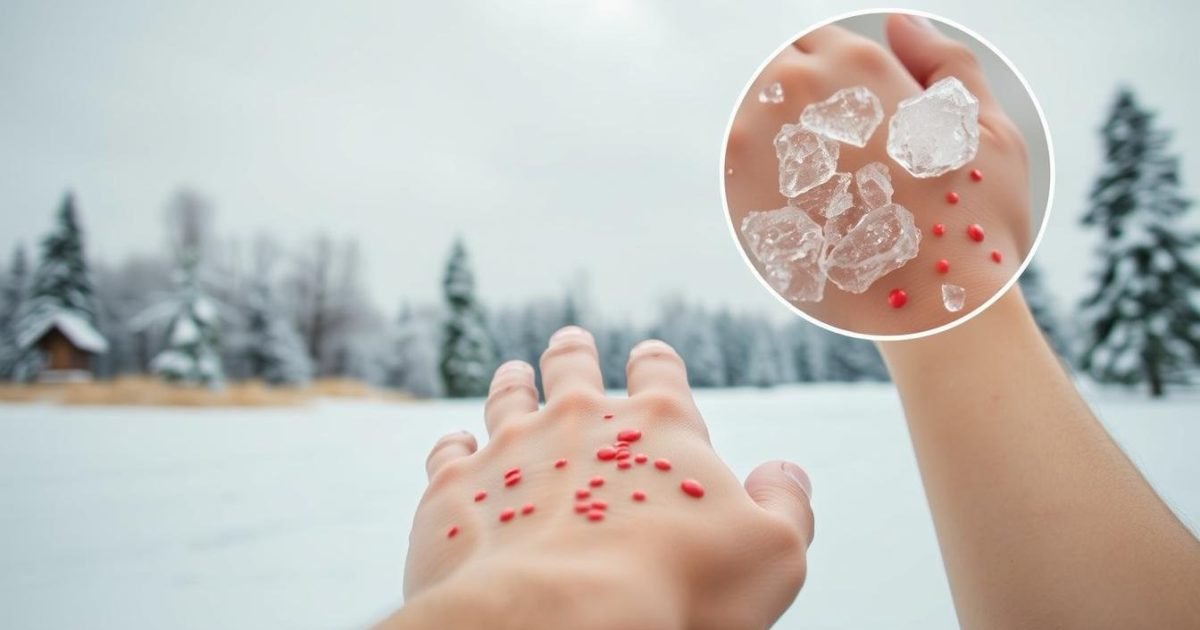
Could a cold splash, winter breeze, or iced drink trigger hives—or even a dangerous reaction—you never expected?
Cold Urticaria is a rare condition. It happens when cold air, water, food, or drink causes an allergic reaction. Many people get quick welts, itching, or swelling from touching cold things.
In some cases, symptoms can spread fast. They can affect breathing, blood pressure, and even make you lose consciousness, as Mayo Clinic and Cleveland Clinic say.
This guide helps you understand Cold urticaria symptoms. It shows how to get diagnosed and manage the condition. You’ll learn to spot early signs, prevent outbreaks, and know when to use epinephrine, as your doctor advises.
Risk increases with sudden, full-body cold exposure. This includes swimming in cold lakes or oceans. A quick drop in blood pressure can cause fainting or shock. But, with early signs and precautions, most people can manage their symptoms and feel safer.
Key Takeaways
- Cold Urticaria causes hives or swelling after contact with cold air, water, or chilled foods and drinks.
- Cold urticaria symptoms can escalate to low blood pressure, trouble breathing, or fainting in severe cases.
- Cold urticaria management focuses on trigger avoidance, daily antihistamines, and an emergency plan.
- Sudden cold-water immersion is a high-risk trigger and may lead to dangerous reactions.
- A United States health guide approach emphasizes evaluation, prevention, and clinician-directed treatment.
- Carry epinephrine if prescribed, and discuss safety steps for travel, exercise, and outdoor activities.
What is Cold Urticaria?
Cold Urticaria is when your skin reacts to cold. It’s like getting hives from cold air, water, or objects. It’s not contagious and can affect just one area or your whole body.
Overview of the Condition
Hives and itching start quickly after cold exposure. They can get worse when your skin warms up. Swelling often happens on hands, face, or thighs.
Some people also feel headaches, dizziness, or tightness in their chest. This happens when more of their body gets cold.
Cold Urticaria can change from day to day. A short walk in the cold might cause mild hives. But, suddenly getting into cold water can make symptoms worse.
Causes of Cold Urticaria
The exact cause is not known. But, cold can make mast cells in your skin release histamine. This is why you get itching, redness, and swelling fast.
Some cases are linked to other health issues. Infections, blood disorders, or blood cancers can make Cold Urticaria worse. These conditions can make your immune system react more to cold.
Risk Factors and Triggers
Age and health history play a role. Young adults often get it first, while others get it after illnesses like hepatitis. Rare cases can cause painful welts and flu-like symptoms after getting cold.
Common things that can trigger Cold Urticaria include:
- Cold weather, strong wind, and damp air
- Ice packs or holding a cold drink
- Swimming or bathing in cold water
- Eating or drinking very cold foods and beverages
Getting your whole body cold is the biggest risk for serious reactions. Knowing what triggers Cold Urticaria for you can help you stay safe every day.
Symptoms of Cold Urticaria
Cold urticaria symptoms start within minutes of being exposed. They might seem mild at first but get worse as the skin warms up. Knowing when, where, and what you touched or ate can help figure out a Cold urticaria flare.
Common Symptoms
Hives from cold look like itchy, raised welts on the skin. They are often red and swollen. The itch can get worse when the skin warms up.
Hands might swell after holding a cold drink. Lips can swell after eating ice cream or drinking iced drinks. Most episodes last about two hours, but the skin can stay tender.
- Localized welts with burning or itch
- Swollen fingers when handling cold objects
- Lip or mouth swelling after cold foods
- Tight, tingling skin during rewarming
Severe Reactions: Anaphylaxis
Big exposure areas can increase Anaphylaxis risk. Signs include fainting, a fast heart, wheezing, or swelling in the tongue and throat that makes breathing hard.
Swimming in cold water is a big risk. System-wide hives from cold can cause shortness of breath, chest tightness, or dizziness. Use an epinephrine auto-injector fast if severe symptoms start.
- Sudden breathing trouble or wheeze
- Diffuse hives and flushing
- Throat, tongue, or trunk swelling
- Lightheadedness, possible shock
How Symptoms Vary by Individual
Reactions can be small welts or big flares. Some people feel tired, have headaches, fever, or joint pain during a Cold urticaria flare.
Onset can be quick in some cases, but in others, it may take 30 minutes to 48 hours. It can last one to two days. Cold weather, wind, and drinks can make symptoms worse.
- Fast-onset hives from cold vs. delayed familial patterns
- Short episodes vs. day-long reactions
- Weather, wind, and moisture amplify flares
- Cold intake may prompt mouth or throat symptoms
Diagnosing Cold Urticaria
Getting a Cold urticaria diagnosis starts with talking and safe tests. Doctors look for patterns and confirm triggers. They also rule out other causes. This helps match your real-life exposures with findings.
Medical History Review
Doctors ask when hives show up after cold, how long they last, and if rewarming changes them. They note how severe, if you faint, wheeze, or feel tight in your chest. Symptoms that peak within two hours suggest Cold urticaria.
They also check for infections, autoimmune issues, and blood disorders. Knowing when symptoms started helps figure out if it’s a primary or secondary case.
- Trigger details: cold air, ice packs, chilled drinks, or swimming
- Systemic signs: dizziness, swelling of lips or tongue, breathing difficulty
- Course: duration, recurrence, and response to medicine
Skin Tests and Cold Stimulation Tests
A clinician might use a Cold stimulation test to trigger symptoms. They apply cold to your skin and then warm it up. Raised, itchy welts on rewarming confirm Cold urticaria.
Before swimming in cold water, a hand-dip test can show risk. They give clear instructions to avoid unsafe exposure during testing.
- Apply cold to forearm for a set time
- Remove and allow rewarming
- Observe for a hive within minutes
Blood Tests and Allergy Testing
When needed, labs check for secondary causes like viral hepatitis or blood diseases. This helps guide the Medical evaluation for hives.
Allergy testing might be added to rule out other triggers. It helps refine your care plan. Panels for chronic urticaria can also help.
| Diagnostic Step | Purpose | Typical Findings | What It Informs |
|---|---|---|---|
| History and Physical Exam | Map symptoms to cold exposure | Hives within minutes, resolve in up to two hours | Supports Cold urticaria diagnosis and safety planning |
| Cold Stimulation Test | Reproduce hives under control | Wheal appears on rewarming at test site | Confirms cold sensitivity threshold |
| Blood Work | Screen for secondary causes | Abnormal liver markers or hematologic clues when present | Directs further Medical evaluation for hives |
| Allergy Testing | Identify additional triggers | Positive reactions to specific allergens | Refines management alongside Cold stimulation test results |
Key takeaway: a stepwise approach balances accuracy with safety while keeping your daily risks in view.
Understanding Cold Urticaria Types
Knowing the Types of cold urticaria helps you spot patterns, plan ahead, and talk with your clinician in clear terms. The categories below explain how cold triggers lead to different timelines and risks.
Primary vs. Secondary Cold Urticaria
Primary acquired cold urticaria is the most common. Hives and swelling start within minutes of cold exposure. They usually fade in one to two hours. Many cases appear in teens and young adults.
Secondary cold urticaria is less common. It may tie to infections or malignancy. If reactions are severe, unusual, or start later in life, doctors often screen for underlying causes. This split between primary and secondary forms shapes testing and follow-up.
Other Related Conditions
Some people face hereditary patterns. Familial cold autoinflammatory forms can bring painful welts, chills, and fatigue after cold. Symptoms may last one to two days.
Cold-induced syndromes and chronic inducible urticaria also enter the differential. These overlaps matter when timing, severity, or systemic signs do not fit a simple exposure-and-fade story.
Long-lasting or Recurring Episodes
Cold urticaria recurrence is common with repeat exposure, even when treatment helps. Typical acquired episodes last about two hours, while familial patterns can persist much longer.
Tracking triggers, onset, and duration can reveal whether Primary acquired cold urticaria, Secondary cold urticaria, or a related condition best matches your experience. Patterns over time guide safer routines and smarter prevention.
Treatment Options for Cold Urticaria
Care plans aim to calm histamine release, prevent flares, and prepare for emergencies. Effective Treatment for cold urticaria blends daily control with rapid-response tools you can carry. The steps below reflect guidance often used by U.S. clinicians, including allergists.
Antihistamines: First-Line Treatment
Most people start with Antihistamines for hives. Nonprescription choices like cetirizine, loratadine, or fexofenadine can reduce itch, wheals, and swelling. Some clinicians use higher, supervised doses for stubborn symptoms.
Planning a ski day or a cold swim? Preventive dosing before exposure may blunt a flare. Many also keep a dose on hand for breakthrough hives. This approach is a core part of Cold urticaria remedies used in clinics across the United States.
Corticosteroids for Severe Cases
Short courses of oral corticosteroids may help during major flares that do not respond to antihistamines. These medicines are not first-line due to side effects, so they are used with medical oversight and for brief periods.
Specialists may add therapies in select cases. Omalizumab injections are sometimes considered for recurrent or severe disease. If an infection is found, antibiotics address the cause, while the skin symptoms are treated in parallel.
Emergency Treatments and EpiPen
Cold exposure can rarely trigger a systemic reaction. An Epinephrine autoinjector, such as EpiPen or Auvi-Q, may be prescribed for those at higher risk, including people who react during swimming. Keep it accessible and know how to use it.
If breathing trouble, throat tightness, or dizziness occurs, epinephrine is the immediate step and emergency care is essential. Desensitization with gradual cold exposure is sometimes tried by specialists, but it requires caution and monitoring.
| Option | Primary Role | When Used | Key Advantages | Important Notes |
|---|---|---|---|---|
| Antihistamines for hives | First-line control | Daily prevention and before cold triggers | Reduces itch, wheals, swelling | Consider supervised higher dosing if symptoms persist |
| Short-course corticosteroids | Rescue for severe flares | Brief use during significant episodes | Rapid inflammation control | Not first-line; monitor for side effects |
| Epinephrine autoinjector | Emergency treatment | Systemic reactions or airway symptoms | Immediate action against anaphylaxis | Carry at all times; use then seek emergency care |
| Omalizumab | Add-on therapy | Refractory or frequent episodes | May reduce flare frequency | Administered by a specialist |
| Desensitization protocols | Selected cases | Carefully monitored cold exposure | Potential to raise tolerance | Risk of reactions; specialist supervision required |
| Cold urticaria remedies | Supportive measures | Alongside medical therapy | Layered clothing, trigger planning | Enhances Treatment for cold urticaria outcomes |
Lifestyle Adjustments and Precautions
Making small changes in your daily life can help prevent cold urticaria. These changes can reduce flare-ups and stress. They also help you avoid hives from cold without giving up fun activities.
Dressing Appropriately for the Weather
Wear clothes in layers. Start with a moisture-wicking base layer. Then add a warm mid-layer and a windproof shell.
Insulated gloves, a snug hat, a scarf, and thermal socks protect your hands, ears, nose, and toes. Cover your skin before going outside to avoid cold triggers. Keep dry clothes in your bag for emergencies.
- Tip: Pre-warm your car and hold metal objects with gloved hands.
- Choose soft, non-scratchy fabrics to lower irritation risk.
- Use UPF clothing and mineral sunscreen when sun and wind combine, as noted in expert lifestyle guidance.
Avoiding Cold Exposure
Limit time in cold air and water. Drink room-temperature drinks and avoid ice-cold foods. Test water with a brief hand dip before swimming; sensitivity can vary day to day.
Plan routes that avoid wind tunnels and shaded, icy blocks. Carry hand warmers for quick relief. These steps help prevent cold urticaria while keeping outings practical.
- Wear a scarf as a face shield in gusty weather.
- Keep a thermos with warm tea to counter chill on the go.
- Change out of damp clothing fast to Avoid cold triggers from evaporative cooling.
Safety Measures During Activities
Avoid full-body immersion in cold water. If exposure is unavoidable, ensure close supervision due to risks like fainting. Follow your action plan and keep an epinephrine autoinjector if prescribed.
Tell companions about symptoms and steps to take. Before any surgery or procedure, alert clinicians that operating rooms are often cold. Clear communication strengthens Cold urticaria management and can Prevent hives from cold during high-risk moments.
- Set phone alerts for medication timing before outdoor events.
- Use trial runs—short exposures—to gauge tolerance on a given day.
- Confirm event venues have warm indoor areas for quick breaks.
Managing Cold Urticaria at Work
Workdays can be safe and productive with thoughtful Cold urticaria management. Small changes help Prevent cold exposure at work, reduce flares, and keep tasks on track. If Cold sensitivity at work is an issue, planning ahead makes a real difference through practical Workplace accommodations.
Communicating with Employers
Share a brief medical note or action plan from your clinician. Explain triggers like over-air-conditioned spaces, outdoor deliveries, or handling ice packs. Clear details support reasonable Workplace accommodations and make it easier to Prevent cold exposure at work.
Discuss emergency steps if symptoms spread beyond the skin. If prescribed, let your manager know you carry an epinephrine autoinjector, such as an EpiPen. Identify who to call, where the device is stored, and when to seek 911.
- Set a point person for urgent help.
- Note signs that require stopping work, like dizziness or throat tightness.
- Review the plan during team safety briefings.
Creating a Comfortable Work Environment
Start with the room climate. Request a seat away from cold vents or doors. When allowed, adjust the thermostat, or use a small space heater or heated blanket. These steps support daily Cold urticaria management while respecting shared spaces.
Keep warm layers at your desk—cardigan, scarf, and hat. Use insulated gloves when handling chilled items or visiting walk-in coolers. These simple tools help Prevent cold exposure at work and ease Cold sensitivity at work.
- Relocate to sunlit areas or interior zones when possible.
- Stash hand warmers and a spare pair of dry socks.
- Schedule short warm-up breaks after time in cold rooms.
Ease transitions. When entering or leaving buildings, allow a gradual temperature shift. Slow changes lower the chance of rebound hives as you rewarm, a tip echoed by Mayo Clinic guidance on cold-triggered reactions.
- Pause in a lobby or vestibule before stepping outside.
- Layer up ahead of deliveries or outdoor meetings.
- Coordinate tasks so cold exposure is brief and predictable.
With steady communication and simple gear, Workplace accommodations become routine. That balance lets you manage Cold sensitivity at work and sustain productivity without sacrificing health.
Cold Urticaria and Travel
Planning ahead makes cold trips safe. What you pack and where you stay can help. Simple steps can prevent cold urticaria flare-ups.
Preparing for Cold Weather Trips
Start with layers. Wear thermal base layers, a fleece, and windproof outerwear. Don’t forget warm gloves, scarves, and face masks.
Keep medicines handy. Carry non-drowsy antihistamines and epinephrine autoinjectors in your carry-on. Store them in a warm place to avoid freezing.
- Take indoor breaks to warm up.
- Avoid full-body cold exposure like swimming.
- Choose lodging near transit to stay warm.
Plan for cold sensitivity in your trip. Check the weather and water temperatures. Add buffer time to avoid risks.
Tips for Handling Symptoms While Traveling
Test your limits before trying new activities. Use a quick hand-dip test for water activities. Stop if you feel hives or tingling.
Protect your mouth and throat. Avoid cold foods and drinks. Choose warm drinks and snacks.
- Tell friends about your condition and emergency steps.
- Find urgent care or hospitals near your stops.
- Carry a printed plan for your medicines.
Watch out for wind, wet clothes, and sudden temperature changes. With careful planning, you can avoid flare-ups and enjoy your trip.
Cold Urticaria and Exercise
Staying active is possible with care. Exercise with cold urticaria needs smart planning and gear. This helps keep reactions away.
Aim for comfort first. Many people choose indoor routes or studio classes when it’s cold. Outdoor workouts can work too, but you need to protect yourself.
Exercising in Cold Weather
Prefer indoor sessions during long cold spells. If you go outside, wear thermal base pieces under windproof outerwear. Cover your ears, hands, and face.
Keep breaks short to limit skin exposure. Switch damp clothes fast. Avoid open-water swims and unheated pools.
- Choose low-wind routes and sunny windows of the day.
- Use a neck gaiter to warm the air you breathe.
- Carry an epinephrine auto-injector if prescribed and tell a workout partner your plan.
Cold-weather workouts should start at a gentle pace. Build heat first, then add intensity once you feel warm.
Hydration and Warm-Up Techniques
Start with a 10–15 minute indoor warm-up to raise skin temperature. Dynamic moves like marches and arm swings work well. Cool down indoors, too, for gradual rewarming.
Drink room-temperature fluids before, during, and after exercise. Avoid ice-cold beverages. Keep sips steady.
- Test new routines at home first to see how your skin responds.
- Log triggers, layers, and timing to fine-tune Physical activity precautions.
- Use a moist heat pack on wrists or forearms for a brief pre-warm when needed.
Exercise with cold urticaria thrives on preparation. With layered clothing, measured pacing, and mindful hydration, Cold-weather workouts can be safe and satisfying.
Emotional and Psychological Impact
Living with cold urticaria is like always checking the weather. Your mood can change with the weather too. Feeling calm on mild days and tense before it gets cold is common. Naming these feelings and using strategies helps you feel in control.

Coping with Lifestyle Changes
Small changes can help a lot. Having a plan for antihistamines, warm clothes, and gradual exposure helps. Keeping a bag with essentials makes daily choices easier.
Use reminders and habits to stay on track. Keep a coat by the door and set reminders for meds. This helps, even when routines change at work or school.
What helps in the moment?
- Pause and scan for triggers before stepping outside.
- Warm the skin gradually after exposure, not with sudden heat.
- Log flares to spot patterns and refine plans.
Support Networks and Resources
Having a team helps a lot. Doctors who know about cold urticaria can help you. Learning from places like Mayo Clinic makes it easier to follow their advice.
Tell your friends and family about your plan. Knowing how to help in an emergency makes things easier. It reduces stress and makes responses faster.
- Review your plan with your clinician twice a year.
- Teach one person at home and one at work how to respond.
- Keep Patient resources handy for quick refreshers.
| Need | Practical Step | Why It Helps | Who to Involve |
|---|---|---|---|
| Daily Control | Schedule antihistamines and layer clothing | Stabilizes routine and reduces flare risk | Allergist, pharmacist |
| Trigger Awareness | Track temperature, wind, and exposure time | Links conditions to reactions for smarter choices | Clinician reviewing logs |
| Rapid Response | Carry rescue meds and a printed plan | Speeds help during sudden symptoms | Family, coworkers |
| Emotional Support | Set check-ins and share progress | Lowers isolation while Living with cold urticaria | Trusted friend, support group |
| Reliable Guidance | Use Patient resources from major clinics | Reinforces safe, evidence-based coping strategies | Mayo Clinic, Cleveland Clinic materials |
When to Seek Medical Attention
Cold-triggered hives can quickly become serious. Knowing when to see a doctor is key. It helps you act fast and stay safe. You’ll also get a clear diagnosis for cold urticaria.
Recognizing Severe Symptoms
Look out for warning signs after cold exposure. This includes cold-water immersion or chilling large skin areas at once. If you experience fainting, a racing or weak pulse, or swelling, seek emergency care.
Also, watch for trouble breathing or swelling of the tongue, lips, or throat. These are signs of anaphylaxis.
- Anaphylaxis signs include chest tightness, wheezing, dizziness, confusion, or sudden drop in blood pressure.
- Rapid spread of hives beyond the contact area, swelling of limbs or trunk, or vomiting with lightheadedness demands urgent action.
- If you have an epinephrine auto-injector, use it at once for suspected anaphylaxis, then call 911.
Even if symptoms seem to improve, get checked by emergency teams. Biphasic reactions can come back after the first wave.
Understanding Allergic Reactions
Symptoms often start quickly after a sudden chill. Damp wind can make the reaction worse. Episodes usually last about two hours.
Keep a log of triggers and timing. This helps with a precise Cold urticaria diagnosis.
- Plan ahead for cold commutes, ice rinks, swimming, or handling refrigerated items.
- Use layers, warm-up breaks, and barrier methods to reduce skin cooling.
- Discuss When to see a doctor for hives if reactions recur, even when mild, to refine prevention and medications.
Your action plan should include Anaphylaxis signs, how to use epinephrine, and when to call for Emergency care. Clear steps reduce panic and help you respond with confidence.
Cold Urticaria and Other Allergies
Cold urticaria and allergies often go together, but they’re different. Cold makes mast cells release histamine, causing welts and swelling. This can mix with asthma, eczema, or hay fever, making life harder.
What does that mean for you? Triggers can pile up. A windy day, a cold drink, and pollen can make symptoms worse. Knowing how allergies work together helps you stay safe.
Allergy Links and Interactions
Cold urticaria and allergies have common paths, but start differently. Cold is the trigger; allergens like dust mites or ragweed are classic IgE triggers. When both are there, symptoms can last longer and feel stronger.
- Coexisting atopy: eczema, allergic rhinitis, and asthma can make Cold-induced hives and atopy worse.
- Stacked triggers: exercise in cold air plus fragrance can make hives worse.
- Care plans: avoid triggers, use non-sedating antihistamines, and carry an epinephrine auto-injector for severe reactions.
Secondary cold urticaria can come after infections or diseases. A full review of your history helps understand Allergy interactions and makes safer choices.
Cross-Reactivity with Other Allergens
Cold foods and drinks can cause swelling in sensitive people. It’s mast cell activation from cold, not specific proteins. Knowing this helps when reading labels and choosing meals.
| Situation | Likely Mechanism | Typical Signs | Practical Steps |
|---|---|---|---|
| Ice cream or iced beverages | Immune response to cold with local histamine release | Lip tingling, swelling, hives around the mouth | Opt for room-temperature options; sip slowly; pre-dose antihistamines if advised |
| Cold air plus pollen season | Combined cold trigger and aeroallergen exposure | Hives, sneezing, chest tightness in at-risk individuals | Use scarves and masks; manage allergies with prescribed meds |
| Swimming in cold water | Systemic mast cell activation from rapid cooling | Generalized hives, dizziness, or faintness | Test water first; enter slowly; keep an epinephrine auto-injector nearby |
Understanding Cold urticaria and allergies together helps spot real cross-reactivity from cold effects. With clear advice, Allergy interactions become predictable patterns.
For daily planning: protect skin from cold, manage atopic conditions, and be ready for unexpected flares. This balanced approach respects the Immune response to cold while limiting Cold-induced hives and atopy.
The Importance of Research and Awareness
Progress needs clear science and shared knowledge. Cold urticaria research helps make daily life safer. It guides families, clinicians, and communities to act quickly and with confidence.
Ongoing Studies on Cold Urticaria
Recent reviews show where we have strong evidence and where we need more. Mayo Clinic summaries talk about the need for more research. They also mention guidelines for treating chronic urticaria.
More Clinical studies are helping us understand how histamine causes most reactions. They also look into the role of genetics in rare cases. Finding secondary causes is important, too, when symptoms don’t go away.
- Focus areas: trigger thresholds, response to antihistamines, and step-up therapies.
- Shared goals: quicker diagnosis, fewer flares, and safer exposure plans.
Increasing Public Awareness
Stronger Public awareness helps avoid risks in swimming, winter sports, and surgery. Knowing about cold-induced hives helps people spot early signs. It also helps them plan warm-up routines and carry epinephrine when needed.
- Key reminders: early recognition, the typical two-hour episode window, and when to seek urgent care.
- Community actions: school nurse training, pool safety briefings, and pre-op alerts to surgical teams.
Clear messages link Cold urticaria research to practical steps. With steady Education on cold-induced hives, daily choices become safer. This is true from the locker room to the operating room.
Myths and Misconceptions
Sorting truth from rumor is key to staying safe. This guide clears up Cold urticaria myths. It mixes science with everyday tips. Think of it as a quick guide through Misconceptions about hives, based on Facts vs myths.
Common Misunderstandings
- Myth: It’s contagious. Fact: Cold urticaria is not contagious, says the Cleveland Clinic and Chicago allergists.
- Myth: Only extreme cold triggers it. Fact: A quick drop in temperature or cold wind can cause it, Mayo Clinic notes.
- Myth: It’s just a skin rash. Fact: It can get worse, with systemic symptoms and rare anaphylaxis, Mayo Clinic warns.
These points show how Misconceptions about hives can hide real risks. When you compare Facts vs myths, patterns become clear. This makes choosing the right path easier.
Clarifying Facts about the Condition
- Hives often start minutes after exposure and may worsen during rewarming; many episodes fade within about two hours, Mayo Clinic says.
- Primary acquired cases are common in young adults; rare familial forms can appear later and last longer, Mayo Clinic and Chicago allergy experts note.
- Care plans center on antihistamines, smart avoidance, and epinephrine for severe reactions; clinicians also check for secondary causes in atypical cases, advised by the Cleveland Clinic and Mayo Clinic.
Using Accurate information on cold urticaria helps you plan. It narrows the gap between Cold urticaria myths and everyday safety. This keeps the focus on evidence and calm action.
When in doubt, weigh advice through a simple lens: Facts vs myths. With trusted sources and clear steps, you can cut through noise. This way, you manage risk without fear.
Living with Cold Urticaria
Making daily choices can help control it. With the right plan, preventing Cold urticaria becomes easier. Small routines help manage chronic hives without losing momentum.

Daily Life Adaptations
Wear layers to trap warmth. Start with a base layer, then a mid-layer, and finish with an insulated outer layer. Always have gloves, a hat, and a scarf ready. These changes help prevent sudden skin cooling and reduce flare-ups.
Before going outside in the cold, follow your doctor’s advice on taking antihistamines. These tips can help manage symptoms and keep your day steady. Avoid ice-cold drinks and popsicles. Instead, choose drinks at room temperature.
Do a quick hand-dip test before swimming. If a small patch reacts, don’t swim. Cold water can make you feel dizzy, so swim with a buddy and near a warm shower. Tell your healthcare team about any cold procedures so they can keep everything warm.
Keep a small kit with you. It should have a scarf, spare gloves, antihistamines, and epinephrine if your doctor says so. Keep a symptom log and review it with your doctor. For more info on triggers and treatments, see this overview on hives.
Success Stories from Patients
Many people have fewer flare-ups by preventing Cold urticaria and following routines. They plan indoor routes on cold days, take antihistamines as advised, and carry rescue meds. Over time, these habits help manage chronic hives at work, on trips, and during exercise.
Some people improved with omalizumab when antihistamines alone weren’t enough. Others focused on daily routines like warm-ups before going outside, quick rewarming breaks, and telling coaches or supervisors about their condition. This way, they stay active with confidence.
| Strategy | Why It Helps | Real-World Use | Pro Tip |
|---|---|---|---|
| Layered Clothing | Reduces rapid skin cooling that sparks wheals | Thermal base + fleece mid + insulated shell | Pack spare dry socks and gloves for sudden weather shifts |
| Premedication | Blunts histamine response ahead of exposure | Clinician-directed antihistamine before early commutes | Set phone reminders to time doses on cold days |
| Cold-Water Safety | Prevents systemic reactions from immersion | Hand-dip test; avoid solo swims; warm shower nearby | Wear a wetsuit and keep a heated towel at poolside |
| Work & Travel Plans | Limits surprise exposures in cold environments | Indoor routes, car preheating, warm meeting rooms | Carry a pocket thermometer to gauge ambient risk |
| Care Team Alerts | Aligns medical settings with temperature needs | Warm IVs and blankets before procedures | Share a one-page summary of triggers and meds |
| Rescue Readiness | Speeds response if symptoms escalate | Epinephrine if prescribed; quick-access antihistamines | Store meds in a belt pouch to avoid cold in car trunks |
Conclusion: Prioritizing Care for Cold Urticaria
Cold urticaria care is best when it’s simple, consistent, and tailored to you. A good Management plan includes prevention, preparation, and quick action. This mix helps prevent outbreaks and makes life safer at home, work, and while traveling.
Working with a healthcare provider is key. They help make your Treatment for cold urticaria fit your needs, schedule, and goals.
Final Thoughts on Management
Management has three main parts. Prevention means avoiding sudden cold, wearing protective clothes, and using antihistamines as your doctor suggests. Preparation is about carrying epinephrine, telling medical teams about your allergy, and planning for cold weather or swimming.
When hives or swelling start, act fast. This approach is backed by top clinics like Mayo Clinic and Cleveland Clinic. It makes Treatment for cold urticaria work in real life.
If symptoms are unusual, last too long, or are very bad, talk to your doctor. They might change your Management plan. This could mean adjusting doses, adding medicines, or changing how much cold you can handle. These steps help lessen flare-ups and prevent them while keeping your daily life normal.
Encouragement for Affected Individuals
Most people control their symptoms by spotting triggers early and following proven Cold urticaria care. Many episodes get better in about two hours. Smart planning can reduce how often and how bad they are.
With the right self-care and regular check-ups, you can live more freely. You can travel, work, and exercise with less worry. Keep your plan up to date, share it with others, and see Treatment for cold urticaria as a flexible guide that changes with you.
FAQ
What is cold urticaria?
Cold urticaria is an allergic reaction to cold. It causes itchy welts or hives on the skin after cold exposure. These welts usually last about two hours and can get worse when the skin warms up. It’s not contagious.
How common is cold urticaria and who is at risk?
It’s not very common but often affects young adults. Some cases are linked to infections or blood disorders, including rare blood cancers. Rare familial forms may appear later and last longer.
What causes cold urticaria?
The exact cause is unknown. Most people have mast cells release histamine and other mediators when exposed to cold. This leads to itching, redness, and swelling. Some cases may follow infections or systemic diseases.
What are the main risk factors and triggers?
Triggers include cold weather, wind, and damp conditions. Handling ice, swimming in cold water, and eating ice-cold foods or drinks also trigger it. Whole-body exposure, like cold-water immersion, is the highest risk.
What are common symptoms of cold urticaria?
Symptoms include itchy hives on exposed skin, redness, and swelling. Hands can swell when holding cold objects, and lips may swell after cold drinks. Symptoms get worse as you warm up.
Can cold urticaria cause anaphylaxis?
Yes. Severe reactions can include fainting, a racing heart, swelling of the tongue or throat, trouble breathing, low blood pressure, and shock. Large-area cold exposure, like swimming, increases this risk.
Do symptoms vary between individuals?
Yes. Some have mild, localized hives; others experience fatigue, fever, headache, joint pain, or systemic symptoms. Acquired forms start within minutes, while familial forms can be delayed and last one to two days.
How do clinicians diagnose cold urticaria?
Diagnosis starts with a medical history focused on timing after cold exposure, duration (often up to two hours), and any systemic symptoms. Doctors also screen for possible secondary causes.
What is a cold stimulation test?
It’s a controlled exposure of the skin to a cold source to reproduce hives. Noting whether hives appear during rewarming supports the diagnosis. A simple hand-dip test can be used as a safety check before swimming.
Are blood tests or allergy tests needed?
Sometimes. If symptoms are atypical or severe, clinicians may order labs to look for secondary causes such as infections or blood disorders. Broader allergy evaluations may be used based on clinical judgment.
What’s the difference between primary and secondary cold urticaria?
Primary acquired cold urticaria is most common, often affecting young adults and appearing within minutes of cold exposure. Secondary forms are less common and may be linked to infections or cancers, warranting evaluation for underlying causes.
Are there other related conditions?
Familial (hereditary) cold urticaria is rare and can cause painful welts with flu-like symptoms, often delayed after cold exposure. Cold-induced syndromes and chronic inducible urticaria are part of the differential diagnosis.
Do episodes recur or last a long time?
Episodes often recur with repeated cold exposures. Typical acquired episodes last about two hours, but familial forms can persist for one to two days and recur more frequently.
What is the first-line treatment for cold urticaria?
Antihistamines are the mainstay. They can be taken proactively before anticipated cold exposure or after symptoms begin. Many patients find preventive dosing helpful.
Are corticosteroids used for severe cases?
Short courses may be considered for significant flares under medical supervision, but they are not first-line due to possible side effects. Specialists may guide this approach.
When is epinephrine needed and should I carry an EpiPen?
People with a history of systemic reactions or high-risk exposures may be prescribed an epinephrine autoinjector. Use it promptly for signs of anaphylaxis and seek emergency care. Keep it accessible at all times if prescribed.
How should I dress to prevent cold urticaria flares?
Layer up. Wear insulated gloves, hats, scarves, and thermal socks. Protect the face and extremities, and avoid sudden drops in skin temperature that can trigger hives.
What are practical ways to avoid cold exposure?
Limit time in cold air and water, skip ice-cold drinks and foods, and use windproof outerwear. Test water with a brief hand-dip before swimming to gauge sensitivity that day.
What safety steps should I take during activities?
Avoid full-body immersion in cold water. If unavoidable, ensure supervision due to fainting and shock risks. Inform companions about your condition and your emergency action plan, and keep epinephrine available if prescribed.
How can I manage cold urticaria at work?
Share a brief medical note or action plan with your employer. Explain triggers like over-air-conditioned spaces or handling ice packs, and discuss emergency protocols if systemic symptoms occur.
How do I create a comfortable work environment?
Adjust the thermostat or move away from vents, use a space heater if permitted, and keep warm layers at your desk. Insulated gloves help when handling cold items. Ease transitions when entering or leaving buildings.
What should I pack for cold-weather travel?
Bring layered thermal clothing, windproof outerwear, warm gloves, scarves, and face coverings. Carry antihistamines and, if prescribed, an epinephrine autoinjector in your carry-on. Plan indoor breaks.
How can I handle symptoms while traveling?
Test tolerance with short exposures before activities like ice skating. Avoid ice-cold foods and drinks. Inform travel companions about your condition and locate nearby medical facilities in advance.
Is it safe to exercise in cold weather?
Prefer indoor workouts during colder months. If you exercise outdoors, minimize skin exposure with thermal and windproof layers. Avoid swimming in cold water due to elevated risk of systemic reactions and drowning.
What hydration and warm-up tips help?
Warm up indoors to raise skin temperature before going outside. Cool down indoors to reduce rewarming flares. Drink room-temperature fluids instead of icy beverages.
How do I cope with lifestyle changes from cold urticaria?
Protective habits restore control. Use a structured plan: medication timing, clothing strategies, and trigger avoidance. These steps reduce anxiety and improve day-to-day comfort.
Where can I find support and reliable information?
Work with an allergist or immunologist experienced in physical urticarias. Trusted sources include Cleveland Clinic and Mayo Clinic. Educate family, friends, and coworkers to help during exposures.
When should I seek emergency care?
Call emergency services for fainting, trouble breathing, swelling of the tongue or throat, widespread swelling, a racing heart, or signs of shock. Severe reactions are more likely after large-area cold exposure.
How do allergic reactions relate to cold urticaria?
Symptoms often begin soon after sudden cold exposure and can last about two hours. Even mild reactions warrant medical evaluation to confirm the diagnosis and set up a prevention and treatment plan.
Is cold urticaria an allergy to specific foods?
It’s a physical or inducible urticaria. Cold temperature—not a food protein—triggers mast cell activation. It can coexist with other allergies, so a full allergy profile may be useful for some patients.
Can cold drinks trigger cross-reactivity like other allergens?
Cold beverages can provoke lip and throat swelling due to temperature effects, not classic IgE cross-reactivity. Management mirrors allergy action plans: avoid triggers, use antihistamines, and carry epinephrine if prescribed.
What does current research say about cold urticaria?
Studies summarized by Mayo Clinic and journals like Allergy and JACI: In Practice highlight histamine-driven mechanisms in most cases, rare genetic contributions in familial forms, and the need to evaluate for secondary causes when indicated.
Why is public awareness important?
Awareness prevents high-risk exposures, like swimming and surgery in cold operating rooms. It reinforces early recognition, the typical two-hour episode window, and carrying epinephrine when prescribed.
What are common myths about cold urticaria?
It isn’t contagious. It doesn’t require extreme cold—wind, damp air, or ice contact can be enough. It’s not “just a skin rash”; systemic reactions, including anaphylaxis, can occur.
What facts help clarify the condition?
Episodes start quickly and often worsen as skin rewarms. Young adults are often affected in primary forms; familial cases are rare and last longer. Care includes antihistamines, trigger avoidance, and epinephrine for severe reactions.
How can I adapt daily life with cold urticaria?
Build routines around protection: dress in layers, premedicate with antihistamines per clinician advice, and avoid ice-cold foods and drinks. Use a hand-dip test before swimming and alert surgical teams before procedures.
Do people live well with cold urticaria?
Yes. Many maintain work, travel, and exercise with fewer flares by avoiding triggers, using antihistamines on time, and carrying epinephrine when prescribed. Some benefit from specialist therapies like omalizumab when needed.
What are the key steps to prioritize care?
Blend prevention (avoid cold, dress warmly, consider pre-exposure antihistamines), preparation (carry epinephrine if prescribed, inform surgical teams), and prompt response to symptoms. Evaluate for secondary causes when presentations are atypical.
What encouragement can help those affected?
Most people achieve good control with preparation and partnership with clinicians. Episodes often last about two hours and become more manageable with a clear plan and trusted support.
Schedule your appointment with Dr. Khanna