
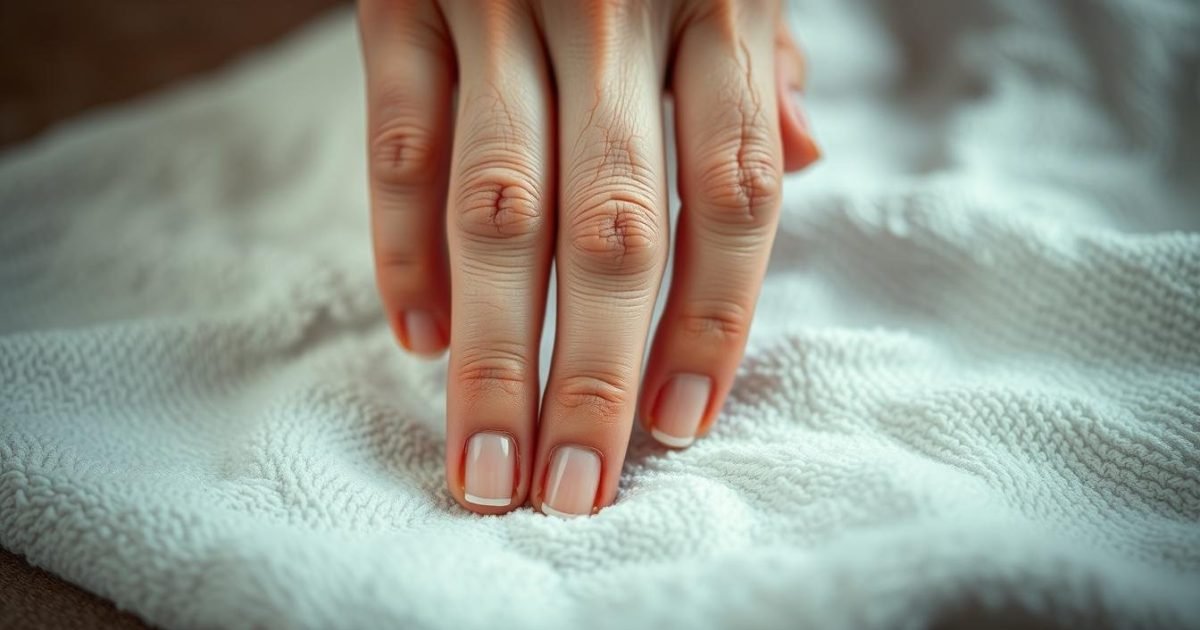
What if the secret to calmer, stronger hands isn’t another harsh sanitizer? But a smarter routine that trains your skin’s immune barrier to work with you, not against you?
This guide gives you clear, science-backed steps to manage Hand Dermatitis—also called hand eczema—without guesswork. It combines medical insight with everyday strategies used in the United States to protect hand skin health at work and at home.
Hand Dermatitis is a common hand skin condition that can crack, sting, and limit daily tasks. The skin acts like a living shield. When the immune system overreacts, inflammation flares. Triggers often include wet work, frequent washing, and chemicals—mostly for healthcare, cleaning, and food service roles.
Care starts simple: steady moisturizers, gentle cleansing, and smart hand care habits. During flares, short courses of topical corticosteroids may help; nonsteroid options and phototherapy can support stubborn cases. Patch testing can uncover allergens, guiding precise, effective care tips that last.
In the pages ahead, you’ll find practical hand care steps, ways to spot triggers, and safe options—from emollients to clinic-based treatments—designed to protect hand skin health for everyday life in the United States.
Key Takeaways
- Hand Dermatitis (hand eczema) is a common hand skin condition driven by local immune overreaction and barrier damage.
- Frequent wet work, detergents, and chemicals raise risk; smart hand care reduces flares.
- First-line care focuses on moisturizers and gentle cleansing, with targeted medicines for flares.
- Patch testing can identify allergens and sharpen effective care tips for long-term control.
- Use protective gloves with cotton liners and remove rings during wet tasks to protect hand skin health.
- Severe or persistent symptoms warrant a dermatology visit for advanced options used in the United States.
What is Hand Dermatitis?
Hand Dermatitis is a skin problem on your hands. It makes your skin dry, itchy, and can crack. It often happens after washing your hands a lot or using harsh products.
This condition is not contagious. But, it can make it hard to do everyday things and feel uncomfortable.
Every flare tells a story. A rash on your hands might start with redness. It can then scale, peel, or crust. When your skin breaks, your immune system gets upset. This makes you itch and hurt.
People who work in cleaning, hairdressing, healthcare, food service, and mechanics get it more. The National Eczema Association says so in its guide on hand eczema.
Definition and Overview
Hand Dermatitis is a type of eczema that only affects your hands. It can be mild or very bad, making it hard to hold things. Soaps, sanitizers, and solvents can make it worse.
- Mild: dry, rough patches, occasional itch.
- Moderate: scaly plaques, peeling, burning.
- Severe: cracking, crusting, and functional pain.
This condition can come and go or stay for a long time. Treatment aims to fix the skin barrier, avoid triggers, and use anti-inflammatory medicines.
Types of Hand Dermatitis
There are different kinds of Hand Dermatitis. Knowing what kind you have helps you avoid things that make it worse.
- Irritant contact dermatitis: Washing your hands a lot or using harsh chemicals can cause it.
- Allergic contact dermatitis: An allergy to certain things like nickel or fragrances can make your hands inflamed.
- Pompholyx (dyshidrotic eczema): Itchy blisters on your palms and fingers, often worse with stress or heat.
- Hyperkeratotic hand dermatitis: Thick, scaly patches that crack a lot; some treatments can help.
Even though they look different, they all are Hand Dermatitis. Finding out what makes it worse and protecting your skin helps manage it.
Common Symptoms of Hand Dermatitis
Spotting early signs is key to preventing a flare-up. Many notice a rash after trying new soaps or washing hands a lot. Look for patterns in your routine that might cause irritation and track changes over time.
Redness and Inflammation
Skin may turn red or darker than usual, based on your skin tone. Swelling around the knuckles or fingers is a sign of inflammation. Over time, thick, scaly patches may form and feel tight.
These symptoms can show up on the palms, between fingers, or along the wrists. During a flare, a rash may crack and sting with motion. This makes simple tasks like gripping a mug or typing uncomfortable.
- Visible changes: red or dusky color, puffiness, flaky texture.
- Touch changes: warmth, tenderness, or a stretched, rough feel.
- Function impact: bending the fingers can split dry skin.
Itching and Burning Sensations
Itching is a big sign and often gets worse at night. Scratching may feel good for a moment but can make things worse. Some flares include small blisters that itch a lot, may weep, and then peel.
Burning and irritation often come from repeated exposure to water, detergents, or sanitizers. When itch gets bad, sleep and productivity can suffer. This shows how hand eczema symptoms affect daily life.
- Common feelings: prickling itch, sharp burn after washing.
- Warning signs: bleeding from splits, tender edges around a hand rash.
- Severity range: mild annoyance to painful hand inflammation during severe flares.
Causes of Hand Dermatitis
Understanding what causes hand dermatitis helps you protect your skin. This condition often comes from two main sources. It can be an immune reaction to something or damage from daily activities.
Heat, sweating, dry air, and stress can make it worse. This is true, even during busy times.
Why it matters: Knowing the cause helps you make better choices at home and work.
Allergic Reactions
Allergic contact dermatitis happens when your immune system sees something as harmful. Even a small touch can cause redness, itch, or blisters. Things like nickel, fragrances, and plant allergens can cause it.
- Reactions may get worse with each contact.
- Patch testing can find the exact allergen.
- Avoiding and reading labels can help.
People with atopy are more likely to get this condition. Their skin is easier to damage, and their immune system reacts quickly.
Irritant Contact Dermatitis
Repeating exposure to irritants can damage the skin’s protective layer. Things like detergents and solvents can dry out the skin. Even washing your hands a lot can be harmful.
- Jobs like healthcare and cleaning are high-risk.
- Cold, dry air and sweating under gloves can make it worse.
- Spacing out wet tasks and moisturizing helps.
When both allergic and irritant causes are present, symptoms can last longer. Keeping track of what you do and use can help you find patterns.
| Trigger Category | Examples | Typical Onset | Clues It’s the Cause | Action Step |
|---|---|---|---|---|
| Allergic contact dermatitis | Nickel, fragrance mix, preservatives (like parabens, formaldehyde releasers), rubber accelerators, poison ivy | Hours to days after contact | Reacts to tiny amounts; returns with the same item | Seek patch testing; avoid identified allergens |
| Irritant exposure | Detergents, solvents, disinfectants, sprays, frequent handwashing, wet work | Minutes to hours, worsens with repetition | Burning or chapping after tasks; improves on days off | Limit exposure, use gentle cleansers, moisturize after rinsing |
| Internal susceptibility | Atopic background, stress, heat, dry air, sweating | Variable, often during flares | Worse in winter or high‑stress periods | Support barrier care; manage stress and environment |
Diagnosing Hand Dermatitis
Getting to the bottom of Hand Dermatitis starts with a detailed plan. A doctor will examine your hands, ask about when symptoms appear, and look at your daily habits. This helps figure out what’s causing your hand rash and what to do next.
Importance of Medical Evaluation
A thorough exam looks at the rash’s pattern, where it is, and how bad it is. You might talk about how often you wash your hands, if you wear gloves, and what sanitizers you use. Bringing all your products, medicines, and supplements helps doctors find the cause.
Doctors might take a skin biopsy if they’re not sure what’s causing the rash. This small test can rule out other conditions like psoriasis or infections. It helps doctors give you the right treatment without delay.
- List recent exposures at work and home.
- Note timing of flares after contact with cleaners or metals.
- Track sleep loss, pain, or itch that affects daily tasks.
Skin Patch Testing
When allergies are suspected, patch testing is used. Small amounts of possible allergens are put on adhesive panels and stuck to your back. They stay there for 2–3 days, and your back must stay dry.
Doctors then check your skin for reactions and match them to things you’ve been exposed to. If nickel, fragrance mix, or rubber accelerators are found, you’ll get a plan to avoid them. Sometimes, a skin biopsy is needed to confirm the diagnosis and rule out other conditions.
- Keep a product diary before the visit to streamline testing.
- Wear loose clothing during the test period to protect the panels.
- If results suggest allergic hand eczema, referral to dermatology supports targeted management.
Treatment Options for Hand Dermatitis
Effective care mixes quick itch relief with long-term skin healing. A good plan for Hand Dermatitis treatment uses different steps. These range from simple drugstore items to special therapies. The goal is to keep the skin calm and protect it.
How do you choose? Pick products based on your symptoms. Keep your routine simple. Change your plan when your symptoms get worse. This helps treat hand eczema and other skin issues without making life hard.
Over-the-Counter Remedies
Using 1% hydrocortisone cream or ointment for a short time can help. It reduces itch and redness. Use it for a short time, then stop. This helps many people feel better during mild flare-ups.
Moisturize often. Use fragrance-free creams or ointments without dyes or alcohol. Ointments are best for very dry, cracked skin. Apply after washing and throughout the day to help treat Hand Dermatitis.
- Gentle, non-soap cleansers or emollient wash substitutes
- Cool compresses for 15–30 minutes to calm hot, itchy spots
- Colloidal oatmeal soaks; dilute vinegar baths if advised by a clinician
These steps are the base of hand eczema therapy. They keep the barrier strong and improve daily life.
Prescription Medications
When OTC care is not enough, doctors offer more options. Potent topical corticosteroids may be needed on palms for short times. Always watch for side effects.
Topical calcineurin inhibitors like tacrolimus are used instead of steroids. New JAK inhibitors also control inflammation. These options help extend relief between flare-ups.
- Phototherapy with narrow-band UVB or PUVA in hand units several times weekly
- Short oral corticosteroid tapers for severe dyshidrotic flares when appropriate
- Systemic immunosuppressants under specialist care for persistent disease
- Alitretinoin for severe chronic hand eczema unresponsive to potent topicals, with strict pregnancy precautions
- Biologic therapy such as dupilumab for select severe cases after clinician review
Working with a board-certified dermatologist is key. They tailor your treatment to your needs, skin type, and lifestyle. This approach supports lasting Hand Dermatitis treatment and practical relief.
Home Remedies for Hand Dermatitis
Small, steady changes make a big difference in hand skin health. Taking care of your hands at home can help. You can calm flares, keep moisture in, and feel more comfortable every day. Start with these simple steps today.
Moisturizers and Emollients
Keeping your hands hydrated is key. Use moisturizers for hand eczema often, even when your skin looks fine. Apply after washing, after getting your hands wet, and before bed. This helps keep your skin barrier strong and blocks irritants.
- Choose texture by time of day: creams for daytime, thicker ointments at night.
- Pro tip: pat hands dry with a soft towel, then reapply right away.
- At night, layer an ointment and wear 100% cotton gloves to lock in moisture.
- Carry a travel-size dispenser to support hand care at home wherever you go.
- After medicated creams absorb, seal with an emollient to boost hand skin health.
Go for fragrance-free, dye-free formulas. Brands like CeraVe, Vanicream, Eucerin, and Aquaphor work well. If needed, a bland petrolatum ointment can act as a gentle barrier.
- Wash with a mild, non-soap cleanser or use your moisturizer as a soap substitute.
- Rinse with lukewarm water, not hot.
- Pat dry, then apply a generous layer within 60 seconds.
Natural Ingredients That Help
Some natural remedies can soothe hand dermatitis. But be careful, as evidence varies and some may cause allergies. Always test on a small area first.
- Colloidal oatmeal soaks for under 10 minutes can relieve itch and calm red, rough patches.
- Aloe vera gel may cool irritation for certain dermatitis types; use pure, additive-free gel.
- Some people try diluted vinegar baths; results are mixed, so stop if stinging or redness worsens.
- For itch relief, place a cool, wet cloth on hands. Keep nails short and avoid scratching to prevent fissures.
If unsure, ask your doctor before trying new products. Mix these options with your daily moisturizers for hand eczema. This will strengthen your hand skin health and support consistent hand care at home.
Preventive Measures for Hand Dermatitis
Daily choices shape skin health. A few smart habits can prevent Hand Dermatitis and support hand eczema prevention. These habits don’t disrupt your routine. Small changes in avoiding irritants and improving hand hygiene add up fast.
Think defense first: protect the skin barrier, reduce exposure, and moisturize like it matters.
Avoiding Known Irritants
Limit wet work and back-to-back washing. Swap harsh detergents and solvents for gentler options. Keep disinfectants off bare skin when possible. Do not peel citrus, onions, chilies, or garlic with bare hands.
Also, skip contact with fruit and vegetable juices or raw meat when ungloved.
- Remove rings before wet tasks to reduce trapped moisture and residue.
- Be cautious with inexpensive metals that may contain nickel.
- Choose protective gear over barrier creams in most jobs; coordinate with Occupational Health for glove selection.
For gloves, go with rubber or PVC gloves that have a cotton lining, or use 100% cotton liners. Powder-free nitrile is a solid choice. Keep the inside dry and limit tight, occlusive wear to about 20 minutes to curb sweat build-up.
Proper Hand Hygiene Techniques
Use emollient soap substitutes for routine cleansing to protect the barrier and prevent Hand Dermatitis. During infectious disease concerns, wash with regular soap, then apply an emollient right after. Pat hands dry—do not rub—and re-moisturize promptly.
- Avoid washing with plain water only; it can strip natural oils without cleaning well.
- Practice glove hygiene: dry hands well, change damp liners, and reapply moisturizer after removal.
- Keep a travel-size moisturizer near sinks, in the car, and in your bag for consistent hand eczema prevention.
With steady, thoughtful hand hygiene and a clear plan for avoiding irritants, the skin barrier stays resilient and calm.
Lifestyle Changes to Manage Hand Dermatitis
Making a few smart changes can help a lot. A good lifestyle for hand eczema includes barrier care, stress control, and simple home tweaks. These steps help manage hand irritation without upsetting work or family life.
Small choices add up: choose gentler tasks, limit wet work, and pace chores to avoid long soak-and-scrub cycles. Keep backups—moisturizers at the sink, spare gloves by the washer—so prevention is always within reach.
Using Protective Gloves
Protective gloves are like a raincoat for inflamed skin. For cleaning, dishwashing, food prep, and hair care, use vinyl or nitrile gloves. Add thin cotton liners to reduce sweat and friction. Keep sessions short to avoid moisture buildup, then moisturize right after.
- Dish duty: consider a dishwasher cycle to cut soak time; if hand-washing, switch water from hot to warm.
- Grooming: wear vinyl gloves while shampooing and styling; blot hands dry and reapply emollient promptly.
- Jewelry: remove rings before washing to prevent trapped irritants and friction on delicate skin.
For hand irritation management on busy days, stage gloves at sinks and in the car. Rotate pairs so liners stay dry and fresh.
Stress Management Strategies
Stress and Hand Dermatitis often go together, making the itch-inflammation loop worse. Brief, steady routines calm nerves and skin. Aim for simple practices you can repeat daily.
- Micro-breaks: 60 seconds of box breathing (inhale, hold, exhale, hold) before tasks that trigger itching.
- Movement snacks: short walks or gentle stretches to ease tension and reduce sweat spikes.
- Sleep anchors: a consistent lights-out time supports repair and strengthens the skin barrier.
Environmental tweaks help too. Avoid overheated rooms and overly dry indoor air; use a cool-mist humidifier and wear breathable layers to manage sweating, which can aggravate pompholyx.
| Daily Scenario | Risk to Skin | Practical Shift | Why It Helps |
|---|---|---|---|
| Dishwashing | Prolonged wet work and detergents | Nitrile gloves with cotton liners; use dishwasher when possible | Reduces exposure and moisture buildup while maintaining hygiene |
| Hair Washing | Shampoos, fragrances, hot water | Wear vinyl gloves; rinse with lukewarm water | Limits irritants and heat that dry the skin barrier |
| House Cleaning | Bleach, solvents, dust | Protective gloves; ventilate rooms; keep sessions brief | Cuts contact time and lowers airborne exposure |
| Workday Stress | Itch-scratch cycle and flares | Scheduled breathing drills; short walks | Blunts stress response, easing inflammation and itch |
| Cold, Dry Air | Barrier cracking and stinging | Humidifier use; frequent emollients; layered clothing | Restores moisture and prevents sweat-triggered irritation |
These habits shape a realistic lifestyle for hand eczema. With protective gloves, calm routines, and targeted hand irritation management, day-to-day life becomes more comfortable and predictable.
The Role of Moisturizers in Treatment
Moisturizers protect fragile hand skin. They keep water in, calm irritation, and fix the barrier lost from washing. A regular hand care routine boosts hydration and lowers flare-ups.
Best Types of Moisturizers
Dermatologists suggest using emollients for hand eczema in many forms. These include lotions, creams, gels, ointments, and sprays. Ointments are best for very dry skin because they lock in moisture tightly.
Choose products without fragrances, dyes, or alcohol to avoid stinging. Many find the best moisturizers for Hand Dermatitis are thick barrier creams before work. Reapply after washing for constant hydration.
- Lotions: light feel, quick to spread, better for daytime top-ups.
- Creams: richer balance of oil and water for regular use.
- Ointments: highest occlusion; ideal for cracks and nighttime repair.
- Gels and sprays: fast application when you are on the go.
| Type | Primary Benefit | Ideal Use | Texture/Occlusion | Notes |
|---|---|---|---|---|
| Lotion | Quick hydration | Frequent daytime reapplication | Light/Low | Good for warm climates; may need more frequent use |
| Cream | Balanced moisture | Routine morning and evening | Medium/Moderate | Fragrance-free versions support a steady hand care routine |
| Ointment | Barrier repair | Nighttime or very dry palms | Thick/High | Helps reduce water loss and shields against irritants |
| Gel | Cooling relief | Post-wash comfort | Light/Low | Useful when skin feels hot or itchy |
| Spray | No-touch application | Work settings or travel | Light/Low | Convenient over tender or cracked areas |
How to Apply Moisturizers Effectively
Use emollients as both a wash substitute and a leave-on product. After cleansing, gently pat the skin until it’s slightly damp. Then, apply a thick layer to keep water in and support hydration.
- Apply within 3 minutes after washing to reduce water loss.
- Use a pea-size amount per palm and between fingers; add more for wrists.
- Reapply after every wash and before tasks that involve water or gloves.
- At night, smooth on an ointment and wear 100% cotton gloves to boost absorption.
- Carry a travel-size emollient for hand eczema to reapply through the day.
This method strengthens the barrier, blocks irritants, and fits into daily care. With regular use, the best moisturizers for Hand Dermatitis make skin calmer, softer, and more resilient.
The Impact of Environment on Hand Dermatitis
Where you live and work affects your hands. Changes in humidity, heat, and daily tasks can make eczema better or worse. Knowing what triggers hand eczema helps you stay comfortable.
Seasonal Factors
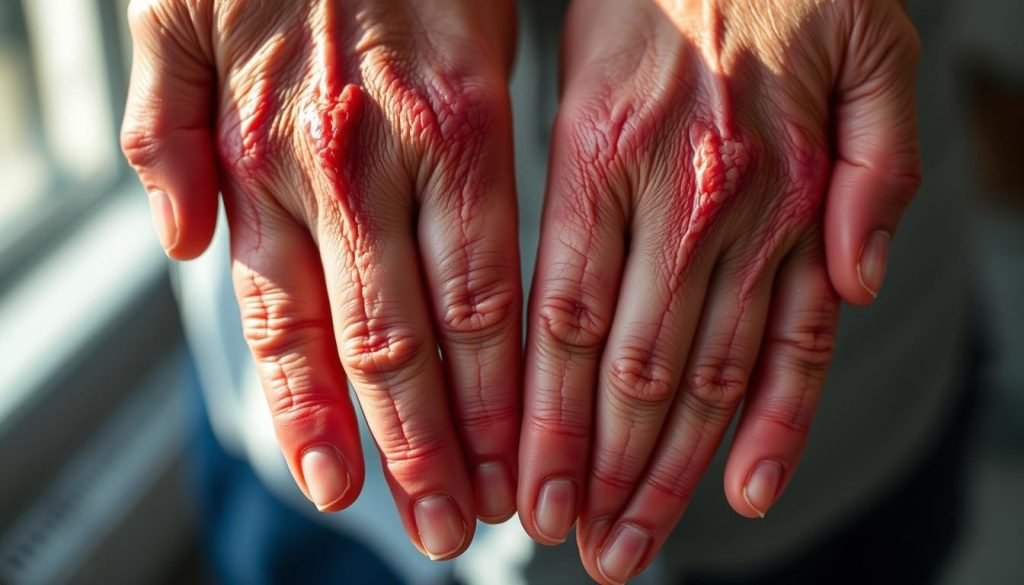
In winter, dry air and indoor heat dry out your skin. Many people get tight, cracked, and stinging hands after washing. Summer heat and sweat can cause blisters and itching.
Simple changes can help. Use a thicker moisturizer in winter and a lighter one in summer. Apply after washing and before bed. Carry a small moisturizer with you to keep your skin moisturized.
- Run a humidifier at night to offset dry indoor air.
- Rinse sweat promptly and pat dry; avoid harsh soaps.
- Choose breathable gloves outdoors and change damp pairs fast.
Workplace Environments
Jobs can be tough on your hands. Wet work, detergents, and chemicals can cause rashes. These can make a mild flare-up worse.
Protective habits can help. Use gloves that match your job, and ask about latex-free options. Don’t rely only on barrier creams; they’re not enough.
- Wear gloves in shorter intervals and swap out wet or torn pairs.
- Add cotton liners to cut sweat and friction during long tasks.
- Remove rings before wet work to prevent trapped irritants.
- Keep a pump of fragrance-free moisturizer at your station and apply at breaks.
Keep track of what makes your hand eczema worse. Note the seasons, products, and tasks that trigger it. Small changes can make a big difference in keeping your skin healthy, even with a tough job.
When to Seek Professional Help
Knowing when to see a dermatologist can stop small problems from getting worse. If a hand rash keeps coming back or doesn’t get better with simple care, a doctor’s help is needed.
Prompt attention protects skin function and comfort. Early advice can lessen scarring, shorten flare-ups, and help avoid hidden triggers at home and work.
Signs of Severe Reaction
See a doctor fast if you have severe Hand Dermatitis. Look for intense pain, lots of blisters, or oozing. Also, watch for redness or swelling that gets worse, fever, or signs of infection like crusting or pus.
Deep cracks that bleed, make it hard to grip, or stop you from doing daily tasks need attention. If you’re not sure when to see a dermatologist, it’s best to book a visit for the same week.
- Escalating symptoms over 24–48 hours
- Blisters or oozing that spread beyond the hands
- Severe itch or burning disrupting sleep
- Functional limits at work or home due to pain
Ongoing Challenges with Symptoms
A hand rash that won’t go away with over-the-counter creams needs special treatment. Dermatologists can find out what’s causing it and give you the right care. They can also adjust your treatment if symptoms come back.
They might suggest patch testing, special creams, light therapy, or stronger medicines. Having a plan for follow-ups helps you know when to see a dermatologist again if symptoms come back.
- Track triggers and exposures at home, work, and the gym.
- Use moisturizers after every wash; switch to fragrance-free formulas.
- Seek review if flares persist beyond two weeks of consistent care.
| Scenario | What You Notice | Recommended Next Step | Why It Matters |
|---|---|---|---|
| Severe flare | Widespread blisters, weeping, fever | Urgent dermatology visit or urgent care | Rules out infection and starts rapid anti-inflammatory therapy |
| Persistent hand rash | Symptoms linger despite OTC care | Clinic appointment for evaluation | Enables testing for allergies and targeted prescriptions |
| Functional impairment | Bleeding fissures limit grip or sleep | Expedited specialist review | Prevents worsening and supports safe return to tasks |
| Frequent recurrences | Monthly flares after brief relief | Discuss long-term plan and triggers | Optimizes hand inflammation care and reduces future flares |
Long-Term Management Strategies
Steady habits make a big difference. A hand skin health plan turns daily choices into lasting relief. It guides long-term hand eczema care and ongoing Hand Dermatitis management with clear steps you can repeat.
Creating a Skincare Routine
A consistent hand care routine starts with gentle cleansing. Use an emollient cleanser, rinse with lukewarm water, and pat dry. Avoid fragrances and dyes, and remove rings before wet work to prevent trapped irritants.
Moisturize often. Apply a rich cream or ointment after every wash and before bed. For daytime, keep a travel-size tube nearby. Before exposure at work, lay down a barrier layer, then reapply as needed.
- Daily: emollient wash, pat dry, frequent moisturizer, fragrance-free products, rings off for wet tasks.
- Weekly: review triggers, adjust glove use, trim nails to reduce scratching risk.
- Flare plan: brief, clinician-directed topical steroid bursts; consider topical calcineurin inhibitors for maintenance; use cool compresses for itch.
Track patterns to sharpen your hand skin health plan. Keep a log of products, stress levels, weather shifts, and work exposures. Small notes reveal which steps help and when to tweak your routine.
Regular Dermatologist Check-Ups
Scheduled visits support ongoing Hand Dermatitis management. A dermatologist can review control, adjust steroid potency, and advise on phototherapy or systemic options when disease persists.
Expect check-ins to reassess allergens and refine your long-term hand eczema care. Discuss new therapies, including biologics where appropriate, and confirm safe glove materials for work or home tasks.
| Visit Goal | What to Review | Action You Can Take | Benefit to Skin |
|---|---|---|---|
| Control Check | Symptom trends, flare frequency, moisturizer use | Bring your log; note worst and best days | Targets gaps in the hand care routine |
| Therapy Tuning | Topical potency, TCI maintenance, flare response | Confirm dosing, ask about step-up/step-down plans | Reduces overuse and improves safety |
| Trigger Review | Work exposures, gloves, soaps, seasonal changes | Test alternatives; swap to fragrance-free options | Fewer flares with a sharper hand skin health plan |
| Advanced Options | Phototherapy, systemic agents, biologics | Discuss eligibility, monitoring, and timelines | Better control in chronic, stubborn cases |
| Barrier Strategy | Pre-exposure creams, reapplication timing | Apply thick creams before tasks; reapply after washing | Strengthens ongoing Hand Dermatitis management |
With structure, feedback, and regular care, your hand care routine becomes a durable system. It protects today and prepares for tomorrow.
Myths and Misconceptions About Hand Dermatitis
When skin gets sore and itchy, it’s easy to get confused. This guide helps you know the truth about Hand Dermatitis. It mixes facts about hand eczema with truths about hand irritation to clear up myths.
Common Misunderstandings
- “Hand eczema is just dry skin.” It’s more than that. It’s an inflammatory disease that needs special care. You need to repair the barrier and use anti-inflammatory treatments, not just lotion.
- “More washing helps.” Washing too much can make things worse. It strips away important oils. Clean gently, dry well, and moisturize right away to avoid irritation.
- “Barrier creams replace gloves.” Creams help but don’t protect from harmful chemicals. Always wear the right gloves for the job and then apply cream.
- “Steroids should be used continuously.” Steroids are good for flares but using them too long can harm your skin. Use them as needed and change your routine as advised.
- “Retinoids are safe for everyone.” Retinoids can help severe cases but are not safe for pregnant women. Always talk to a doctor before starting new treatments.
Clarifying the Facts
- Hand dermatitis is not just about dry skin. It’s a complex issue that needs a balanced approach. This includes fixing the barrier and addressing immune issues.
- Keep your skin moisturized after washing. Carry a travel cream and choose fragrance-free products. These steps are key to caring for your skin.
- For jobs that require gloves, use cotton liners with nitrile gloves. Then, apply cream to prevent irritation. This is a smart way to protect your skin.
- Use steroids only when needed. For ongoing care, consider other treatments like calcineurin inhibitors or light therapy. These options are backed by science.
- If you’re planning to get pregnant, talk to your doctor about any treatments you’re on. Safety should always come first.
Bottom line: Treat the cause, protect the barrier, and tailor your treatment plan. If you’re unsure, always consult a dermatologist. They can help you follow the best hand irritation truths.
Caring for Hands During Winter Months
Cold air outside and dry heat indoors take moisture from our skin. Good routines help keep hands healthy in winter. Small steps can make a big difference every day.
Protecting Against Dryness
Use more emollients as it gets colder. Pick rich creams for the day and ointments for night. This keeps moisture in for better winter hand care.
Use a cool-mist humidifier to fight dry air indoors. Dry hands gently with a soft towel. Avoid rough paper towels and moisturize quickly.
Wash hands with gentle, fragrance-free soap. If needed, wash with soap first, then apply emollient right away. This helps keep hands healthy and prevents cracks.
Winter-Specific Tips
- Layer cotton glove liners under insulated gloves outdoors to reduce sweat and friction tied to seasonal Hand Dermatitis.
- Avoid very hot water, which strips oils; use lukewarm water for washing and bathing.
- Limit long periods in occlusive gloves; take brief breaks to let skin breathe.
- Carry travel-size moisturizer for frequent reapplication throughout the day.
- During food prep, wear gloves and avoid direct contact with citrus, onions, and garlic if peeling worsens symptoms.
These habits make caring for winter hand eczema easier and more consistent. With regular care, keeping hands dry becomes a natural part of your routine.
Understanding the Connection to Other Skin Conditions
Hands can show many skin problems. A good comparison helps spot patterns and causes. Think of skin as a roof: when it leaks, irritants get in and cause trouble.
Distinguishing hand eczema from other issues guides treatment and care.
Hand Dermatitis and Eczema
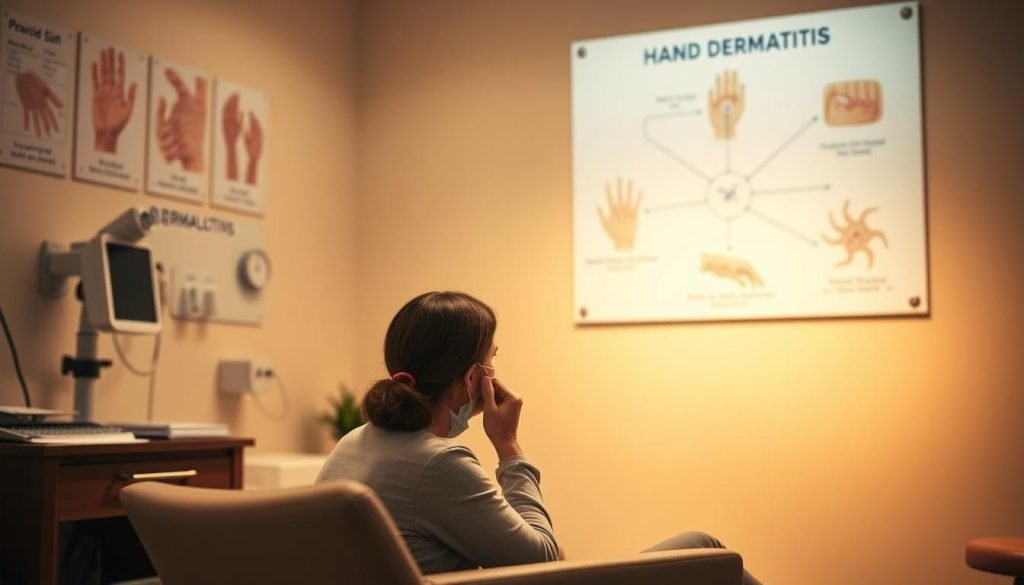
Hand dermatitis often falls under eczema, like atopic eczema on hands. People with atopic eczema have a sensitive immune system and weak skin. Flares can be caused by soap, sanitizer, or too much water.
Care for hand dermatitis is similar to eczema. Use lots of moisturizers, apply anti-inflammatory creams, and try light therapy for tough cases. Dyshidrotic eczema causes itchy blisters on fingers and palms. Heat, sweat, nickel, or stress can trigger it. Severe cases might need a short oral steroid course.
Because dermatitis is wide-ranging, comparing hand conditions is key. When symptoms mix, learning about skin rashes can help understand body inflammation.
Psoriasis Vs. Hand Dermatitis
When comparing psoriasis and hand dermatitis, look for signs. Palmar psoriasis has thick, well-defined plaques with silver scales and can affect nails. Irritant hand dermatitis causes cracks and stinging in flexed areas, with burning after washing.
Hyperkeratotic hand eczema can look like psoriasis, so a biopsy might be needed. Treatments differ: vitamin D analogs and specific immunomodulators work for psoriasis. For dermatitis, focus on repairing the skin barrier and avoiding triggers.
These signs help tell hand eczema apart from other conditions. Watch skin changes, track what you’re exposed to, and see a doctor if symptoms change or don’t get better. This helps refine the comparison of hand dermatological conditions.
Aftercare and Follow-Up for Hand Dermatitis
Healing continues after a flare ends. Good hand dermatitis aftercare helps the skin get better. Simple steps and check-ins help you recover from hand eczema and avoid setbacks.
Key Practices for Recovery
Use emollients often, after washing and before bed, to keep moisture in. Follow your doctor’s advice on tapering topical steroids. Ask about calcineurin inhibitors for long-term use. Wear cotton gloves at night if you scratch a lot, and protect your skin from the sun.
Keep your nails short and use cool compresses when itchy. Avoid picking at your skin to lower infection risk. For bad atopic flares, wet dressings might help under doctor’s advice. Learn about triggers, routines, and stress in this resource on understanding your skin health.
Monitoring for Recurrence
Keep a simple log to track your hand rash. Note products, seasons, work exposures, and stress. See which moisturizers or medicines work and how long they last. This helps you understand your skin better and plan for the future.
If redness, fissures, or itch don’t get better with topicals and avoiding triggers, see your doctor. They might talk about phototherapy or other treatments. They’ll also advise on safety and pregnancy planning for retinoids.
- Daily: Emollient after each wash; gentle cleanser; sun protection on healed areas.
- Weekly: Review triggers; adjust gloves and routines based on tasks.
- Monthly: Assess progress, refill supplies, and prepare questions for follow-up.
| Goal | Action | Why It Matters | When to Reassess |
|---|---|---|---|
| Restore barrier | Frequent emollients; avoid harsh soaps | Reduces dryness and fissures | If cracking or sting persists >2 weeks |
| Control inflammation | Taper steroids per plan; consider TCIs | Maintains remission | If rebound occurs during taper |
| Prevent infection | Don’t scratch; cool compresses; short nails | Lowers bacterial entry risk | If warmth, pus, or fever appears |
| Track triggers | Symptom diary; note seasons and stress | Guides targeted changes | If patterns stay unclear after 1 month |
| Plan escalation | Discuss phototherapy/systemic options | Supports stubborn cases | If control fails despite adherence |
Resources for Hand Dermatitis Support
Getting the right help for hand dermatitis can make life easier. Look for reliable sources that offer clear advice. These groups give you tips, treatment info, and news on new treatments.
Relevant Organizations and Websites
The National Eczema Association helps with hand eczema. They teach about what causes it, how to moisturize, and treatments like JAK inhibitors. They also talk about light therapy and lifestyle changes.
The National Eczema Society in the UK has factsheets on treatments. They cover emollients, steroids, and light therapy. They also give tips for daily hand care.
Mayo Clinic has a lot of info on diagnosing and treating hand eczema. They talk about steroids, light therapy, and medicines like dupilumab. They also suggest home remedies like cool compresses and baths.
Support Groups and Communities
Getting advice from others can help a lot. The National Eczema Association has programs for support and education. They help with managing itch and pain, and fit into busy lives.
For work issues, talk to Occupational Health. They can help with changing tasks, using gloves, and finding gentle cleansers. Stay updated with clinical trials and news from trusted sources.
Using these resources and communities helps you stay on track. It keeps your hand care plan up to date. You get support from groups that rely on science.
FAQ
What is hand dermatitis, and how is it different from simple dry skin?
Hand dermatitis, also called hand eczema, is more than just dry skin. It affects the palms, fingers, and backs of hands. It causes redness, itch, and soreness.
It can make daily tasks painful. The immune system overreacts, leading to inflammation.
What types of hand dermatitis are most common?
There are several types. Irritant contact dermatitis comes from harsh substances. Allergic contact dermatitis is caused by specific allergens.
Pompholyx/dyshidrotic eczema causes itchy blisters. Hyperkeratotic hand dermatitis leads to thick, scaly plaques.
What symptoms signal a flare of hand eczema?
Look out for dry, itchy skin that’s red or darker. Swelling, scaling, and painful fissures are also signs. Small blisters may weep and peel in dyshidrotic eczema.
Severe flares can make it hard to do everyday tasks.
Why do my hands feel hot, itchy, and burn during flares?
The immune system’s response causes inflammation. This leads to itch and burning. Scratching makes it worse.
What triggers cause dermatitis on hands to worsen?
Washing hands a lot and using harsh substances can make it worse. Allergens like nickel and fragrances also trigger reactions. Heat, sweat, and stress can make it worse too.
How do allergic reactions differ from irritant contact dermatitis?
Irritant dermatitis is from damage to the skin barrier. Allergic contact dermatitis is an immune reaction to specific allergens. Once sensitized, even small exposures can trigger inflammation.
How is a hand dermatological condition diagnosed?
A doctor will examine your hands and ask about your symptoms. They’ll also ask about your job, hobbies, and products you use. Sometimes, a biopsy is needed to rule out other conditions.
What is patch testing, and when is it needed?
Patch testing identifies contact allergens. Small amounts of suspected allergens are placed on adhesive patches. The patches are worn for 2–3 days.
A clinician will read the reactions and guide you on avoiding allergens.
Which over-the-counter options help soothe hand irritation?
Use fragrance-free emollients often. Choose creams during the day and ointments for very dry skin or at night. Gentle cleansers or emollient soap substitutes protect the barrier.
Short courses of 1% hydrocortisone can calm mild flares. Cool compresses ease itch; colloidal oatmeal soaks may help.
What prescription treatments are available for hand inflammation?
Potent topical corticosteroids are often needed for short bursts. Topical calcineurin inhibitors or JAK inhibitors can be used as steroid-sparing options. Phototherapy treats stubborn cases.
Severe chronic hand eczema may respond to alitretinoin. Systemic immunosuppressants or biologics like dupilumab may be considered by dermatology.
Which moisturizers work best for hand care and hand skin health?
Emollients in ointment form are most effective for very dry, thick palmar skin. Choose fragrance-free, dye- and alcohol-free formulas. Thick barrier creams can be used before work and reapplied after washing to reduce hand irritation.
How should I apply moisturizers to manage a hand eczema flare?
Pat hands dry, then apply emollient immediately while skin is slightly damp. Layer moisturizer after medicated creams have absorbed. At night, use ointment and 100% cotton gloves to boost penetration.
Do natural ingredients help with a hand skin condition?
Some people find relief with brief colloidal oatmeal soaks or aloe gels. Evidence is mixed, and “natural” products can trigger allergy. Test a small area first. Discuss vinegar or bleach baths with a clinician before use.
How can I avoid known irritants that trigger hand rash?
Limit wet work. Avoid direct contact with detergents, solvents, sprays, stain removers, and raw fruit and vegetable juices. Do not peel citrus, onions, garlic, or chilies with bare hands. Remove rings before wet tasks and be cautious with nickel-containing metals.
What are good hand hygiene techniques without worsening hand dermatitis?
Use gentle, fragrance-free cleansers or emollient wash substitutes. Wash with lukewarm water, not hot. Pat dry, then moisturize right away. During outbreaks, pair necessary hygiene with frequent emollient reapplication.
Which protective gloves are best for preventing hand eczema flares?
Choose vinyl, nitrile, or PVC gloves for wet and dirty tasks. Use 100% cotton liners to reduce sweat. Avoid powdered gloves. Keep glove sessions short—ideally under 20 minutes—and dry the inside between uses.
How does stress management help hand inflammation?
Stress fuels the itch–scratch–inflammation loop. Short breathing exercises, regular sleep, and brief movement breaks can lower flares. Consistency matters more than perfection.
How do seasons affect hand dermatitis on hands?
Winter’s dry air and indoor heating worsen dryness and cracking. Summer heat and sweating can flare dyshidrotic eczema. Adjust moisturizers, use humidifiers in winter, and manage sweat in warmer months.
What workplace risks increase hand dermatological condition flares?
Jobs with wet work and chemicals—healthcare, food prep, cleaning, hairdressing, mechanics, metal work, floristry, printing, and engineering—carry higher risk. The right gloves often protect better than barrier creams. Consult Occupational Health for glove selection.
When is a hand dermatitis flare an emergency?
Seek urgent care for rapidly spreading redness, severe pain, widespread blisters, weeping lesions, crusting, pus, fever, or red streaks. Deep fissures that prevent daily function also merit medical attention.
What if hand eczema keeps coming back despite care?
Persistent or recurrent flares may need dermatology input. Patch testing can uncover allergens. Options include tailored topicals, phototherapy, and systemic treatments such as alitretinoin under specialist supervision.
How do I build a simple skincare routine for chronic hand dermatitis?
Daily: cleanse gently, moisturize after every wash, and protect during wet tasks. Weekly: review triggers, trim nails, and check glove habits. Flare plan: short, clinician-guided steroid bursts, with cool compresses for itch and TCIs for maintenance.
How often should I see a dermatologist for hand eczema?
For chronic or severe disease, schedule periodic check-ups to adjust medication potency, review trigger avoidance, and consider phototherapy or systemic options. Bring a list of products and treatments used.
What myths about hand dermatitis should be retired?
Myths include “it’s just dry skin,” “more washing helps,” and “barrier creams replace gloves.” In reality, it is an inflammatory hand skin condition, excessive washing worsens it, and proper gloves protect better than barrier creams alone. Steroids are for short flares, not continuous use.
What facts clarify safe treatment, including retinoids?
Alitretinoin can help severe chronic hand eczema but is teratogenic. Strict pregnancy prevention is mandatory during treatment. Discuss risks and monitoring with a dermatologist.
How can I protect against winter dryness and hand irritation?
Increase emollient frequency, favor ointments at night, and use a humidifier indoors. Avoid very hot water and rough paper towels. Moisturize right after washing.
What winter-specific tips help prevent hand rash flares?
Wear cotton glove liners under insulated gloves outdoors. Keep a travel-size moisturizer handy. Limit occlusive glove time to reduce sweat buildup. Use gloves for food prep, specially with citrus and onions.
How is hand dermatitis connected to eczema more broadly?
Hand dermatitis sits within the eczema spectrum. Atopic tendencies—impaired barrier and immune reactivity—raise risk. Core treatments mirror atopic dermatitis: emollients, topical anti-inflammatories, phototherapy, and systemic options if severe.
How can I tell hand eczema from psoriasis on the palms?
Both can look thick and scaly. Hyperkeratotic hand dermatitis can mimic palmar psoriasis. If the diagnosis is unclear, a biopsy may help. Treatment strategies may differ, so specialist assessment matters.
What are key practices for recovery after a hand eczema flare?
Keep moisturizing even as skin heals. Taper topical steroids per clinician guidance and consider TCIs for maintenance. Protect from friction, avoid scratching, and wear cotton gloves at night if needed.
How do I monitor for recurrence of hand inflammation?
Track triggers, weather, stress, and workplace exposures. Note response to treatments and set reminders to moisturize. Early action at the first tingle of itch can shorten flares.
Where can I find reliable support and education for hand eczema?
The National Eczema Association and the National Eczema Society offer robust guides on hand care, treatments, and everyday strategies. Mayo Clinic provides diagnosis and treatment overviews with practical home care tips.
Are there communities for people living with hand dermatitis?
Yes. The National Eczema Association hosts support resources and community forums. Many people also seek workplace advice through Occupational Health to tailor glove use and reduce exposures that trigger hand eczema flares.
Schedule your appointment with Dr. Khanna