
What if the fastest way to calm your face isn’t a new cream? But changing the heat, habits, and stress that prime Rosacea Flare-ups? Even before they start?
This guide offers clear, science-based steps for reducing redness in rosacea flare-ups. It also helps build steady routines for daily life. Diagnosis is often visual, and a clinician may rule out psoriasis or lupus. Eye symptoms can need an ophthalmologist, as noted by Mayo Clinic.
Because redness can be subtle on brown and Black skin, watching for stinging, swelling, bumps, or dry-looking patches matters.
You’ll find rosacea management tips that blend at-home care, smart products, and medical options. We cover skincare for rosacea flare-ups, cooling tactics for workouts, and how to prevent rosacea flare-ups with trigger control. For a quick primer on sun, stress, and gentle care, see this brief on rosacea self-care essentials.
Key Takeaways
- Start with gentle, fragrance-free care and mineral SPF 30+ to help in reducing redness in rosacea flare-ups.
- Track heat, spicy foods, hot drinks, alcohol (red wine), and stress; small changes can prevent Rosacea Flare-ups.
- Use cool compresses and lukewarm water; avoid hot showers and overheating during exercise.
- Consider proven topicals and orals (such as brimonidine, oxymetazoline, azelaic acid, metronidazole, ivermectin, or doxycycline) with a clinician’s guidance.
- Laser options may help visible vessels, but effectiveness and pigment risks vary by skin tone.
- Consistent routines and simple products are core rosacea management tips that support calm, resilient skin.
Understanding Rosacea and Its Symptoms
Rosacea is more than a blush that lingers. It’s a chronic condition that affects the central face. Knowing your skin’s patterns helps spot rosacea flare-ups and common triggers.
What is Rosacea?
Rosacea is diagnosed in the clinic with a skin exam and history review. Doctors may test for psoriasis or lupus if features overlap. If your eyes burn, feel gritty, or look red, they might refer you to an eye doctor.
Think of rosacea as a switch that flips under stressors. Heat, spicy foods, or alcohol can flip it, causing sudden redness and sensitivity. Tracking rosacea triggers is key to spotting symptoms early and preventing flare-ups.
Common Symptoms of Rosacea
- Frequent flushing and persistent facial redness, mainly on the cheeks, nose, chin, and forehead.
- Visible blood vessels and swelling; a stinging or burning feel after skincare or sun.
- Acne-like bumps and pustules that look like breakouts but behave differently.
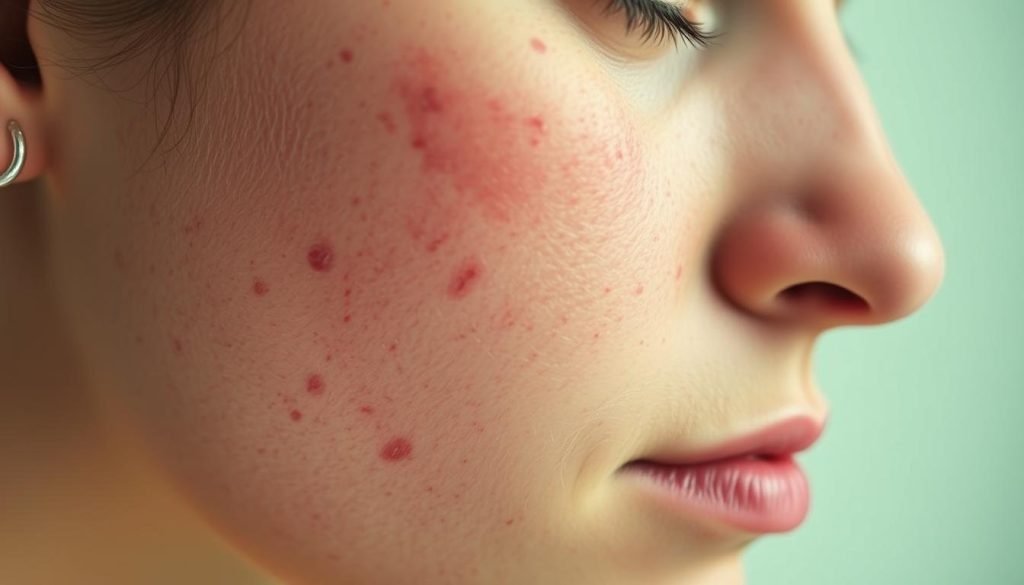
On brown and Black skin, flushing and small vessels may be harder to see. Watch for stinging, tender bumps, swelling, and dry-looking patches. These signs, along with known rosacea triggers, help spot symptoms more accurately.
Types of Rosacea
Rosacea shows up in patterns that guide care. When flushing dominates, doctors may use vasoconstrictive topicals like brimonidine or oxymetazoline to ease visible redness. If papules and pustules are the issue, azelaic acid, metronidazole, ivermectin, or oral doxycycline can help calm Rosacea Flare-ups.
Visible, persistent vessels may respond to laser therapy. Timing, side effects, and skin-tone needs are discussed in detail during a visit. Across all types, mapping rosacea triggers supports identifying symptoms early and shaping a plan that fits daily life.
Triggers of Rosacea Flare-ups
Rosacea triggers can be different for everyone. Small changes in weather, food, or mood can cause flare-ups. Knowing what triggers yours is the first step to prevent them.
Environmental Factors
Sun is a big rosacea trigger. Even a little sun can make your face flush. Always use a broad-spectrum SPF 30+ sunscreen every day.
Heat can also cause problems. Hot showers, steamy baths, and intense workouts can make your skin red. Try to cool the room and exercise when it’s cooler.
Wind and cold can hurt your skin. Use a soft scarf to cover your face. Stay inside when it’s windy and warm up slowly after going outside.
Dietary Contributions
Hot drinks can make your skin worse. Try iced coffee or lukewarm tea instead. Alcohol, like red wine, can also make your face flush. Drink white wine or spritzers and have water between drinks.
Spicy foods can also cause flare-ups. Choose mild foods and eat small amounts. Some people react to vitamin B3 in energy drinks and supplements.
Changing your diet can help. Drink cooler drinks, eat less spicy food, and choose your alcohol wisely. This can help prevent flare-ups at meals.
Stress and Emotions
Stress can make your skin red fast. Try deep breathing or meditation to calm down. Gentle activities like tai chi can also help.
Take breaks during the day to relax. Go for a walk, listen to music, or do something you enjoy. This can help manage stress and prevent flare-ups.
Important note: Some medicines can make rosacea worse. Don’t stop taking your medicine without talking to your doctor. They can suggest other options.
| Trigger Category | Common Examples | What Often Happens | Practical Swap to Reduce Flares |
|---|---|---|---|
| Sun Exposure | Midday UV, beach days, outdoor sports | Rapid facial flushing and warmth | Daily SPF 30+ mineral sunscreen, wide-brimmed hat, seek shade |
| Heat | Hot showers, saunas, heaters, intense workouts | Prolonged redness and burning | Cooler water, shorter sessions, fans, exercise in cooler hours |
| Cold & Wind | Winter air, strong gusts, windburn | Stinging, dryness, flare onset | Silk or acrylic face covering, limit exposure, gradual rewarming |
| Food & Drink | Hot beverages, red wine, spicy dishes, niacin | Immediate flushing and warmth | Iced or lukewarm drinks, white wine or spritzers, mild spices, label checks |
| Stress & Emotion | Deadlines, public speaking, conflict | Sudden flush, lingering redness | Deep breathing, meditation, tai chi, short enjoyable breaks |
Importance of a Consistent Skincare Routine
Daily habits shape skin comfort. A steady plan offers gentle support for sensitive faces. It helps with skincare for rosacea flare-ups. Small, repeatable steps can aid in reducing redness in rosacea flare-ups.
Gentle Cleansing
Cleanse twice a day with a nonsoap cleanser and lukewarm water. Pat dry—do not rub. Skip astringents and toners that sting.
- Avoid alcohol, menthol, camphor, urea, and sodium lauryl sulfate near the face.
- Keep hands off hot spots to limit friction and heat.
- These steps support skincare for rosacea flare-ups and make reducing redness in rosacea flare-ups more achievable.
Hydration and Moisturizing
Choose fragrance-free creams. Look for barrier helpers like dimethicone and soothing actives such as niacinamide. Some moisturizers with azelaic (dicarboxylic) acid may ease visible flush.
- Apply an emollient before makeup to cut drag and improve wear.
- Layer light to rich textures to lock in water.
- These rosacea management tips keep skin calm and steady between flares.
Sun Protection
Use broad-spectrum SPF 30+ every day, even when it is cloudy. Mineral filters—zinc oxide and titanium dioxide—are often better tolerated.
- Consider Eucerin Sensitive Mineral Zinc Oxide Protection or La Roche-Posay Tinted Mineral.
- Silicone-based textures (dimethicone, cyclomethicone) add slip and a soft barrier.
- Apply after prescription topicals, before makeup; reapply every two hours outdoors, pair with hats and shade.
- Consistent sunscreen is central to skincare for rosacea flare-ups and reducing redness in rosacea flare-ups.
With clear steps and steady care, these rosacea management tips help skin feel cooler, look calmer, and stay resilient.
Identifying Personal Triggers
Small daily choices can spark flushing, yet patterns often hide in plain sight. By identifying rosacea flare-up symptoms alongside specific exposures, you gain a roadmap for how to prevent rosacea flare-ups. The goal is to spot consistent rosacea triggers and adjust before redness escalates.
Keeping a Symptom Diary
A brief, steady log helps connect dots. Track the setting, what you ate or drank, your mood, and your skin’s response. Over time, identifying rosacea flare-up symptoms next to likely rosacea triggers reveals cause-and-effect you can act on.
- Environment: Sun, heat, wind, cold, humidity, or indoor heaters/saunas; record time and duration.
- Diet and drinks: Spicy foods, hot soups, coffee or tea temperature, alcohol type and amount (wine, beer, spirits).
- Stress and exercise: Stress level, workout intensity, and recovery—note breathing and sweating.
- Products: New skincare or haircare; list brand, product name, and active ingredients like acids or retinoids.
- Medicines and supplements: Dose and timing, including vitamin B3 (niacin) and any changes in prescriptions.
- Symptom details: Flushing, burning, stinging, bumps, swelling, and eye irritation—rate severity and length.
For clarity, log what eases symptoms—cool compresses, a fragrance-free moisturizer, or shade. These notes point to how to prevent rosacea flare-ups by refining routines that actually work.
| What to Record | Examples | Why It Helps |
|---|---|---|
| Timing & Duration | 2:00 p.m. gym; redness for 45 minutes | Aligns identifying rosacea flare-up symptoms with daily rhythms. |
| Exposure | Direct sun, hot shower, windy walk | Surfaces repeatable rosacea triggers to modify. |
| Food & Drink | Spicy tacos; hot green tea; 1 glass red wine | Separates heat effects from specific ingredients or alcohol types. |
| Products Used | Cetaphil Gentle Skin Cleanser; La Roche-Posay Toleriane | Links actives and formulas to skin responses. |
| Relief Measures | Cool pack; mineral sunscreen SPF 50 | Guides how to prevent rosacea flare-ups with proven steps. |
Consulting with a Dermatologist
A board-certified dermatologist can confirm the diagnosis and tailor care. Expect a review of onset, frequency, and patterns as well as what helps or worsens your skin. Your diary strengthens this visit by spotlighting rosacea triggers and identifying rosacea flare-up symptoms across days and seasons.
- Assessment: Rule-out tests may address psoriasis or lupus; eye symptoms can prompt an ophthalmology referral.
- Plan: Personalized treatment, patch-testing for products, and guidance on alternative drugs if current meds aggravate flushing.
- Smart questions to bring:
- What are the most likely causes of my pattern?
- Which tests do I need, if any?
- What treatments fit my skin and budget, including generics?
- How can this plan align with my other conditions and medicines?
- What daily skin care routine should I follow?
With clear records and expert input, you can refine how to prevent rosacea flare-ups by reducing exposures, selecting gentle products, and timing activities to protect your skin’s threshold.
Topical Treatments for Flare-ups
Choosing the right products can really help with rosacea flare-ups. This guide helps you pick the best ones. It shows you what works fast and what takes time.
Prescription Options
Brimonidine (Mirvaso) and oxymetazoline (Rhofade) can reduce redness quickly. But, insurance might not cover them. So, people use them only when needed, like for photos.
Azelaic acid (Azelex, Finacea) and metronidazole (Metrogel, Noritate) can take 2 to 6 weeks to work. Ivermectin (Soolantra) might take longer but is often more effective. Doctors often mix these to get the best results. For more info, check out the Mayo Clinic treatment guide.
- Pro tip: Start with redness reducers, then use anti-inflammatory gels or creams.
- Be careful not to use vasoconstrictors too much to avoid rebound flushing.
- Always apply sunscreen after using prescriptions, then makeup.
Over-the-counter Solutions
Use gentle, fragrance-free cleansers and rich moisturizers every day. Look for face creams with azelaic acid or niacinamide to reduce redness. Green-tinted primers can also help hide flush.
- Stay away from alcohol-based gels and thin, stingy lotions.
- Use mineral sunscreen with zinc oxide or titanium dioxide.
- Apply products in this order: medicated, moisturizer, sunscreen, makeup.
Being consistent is key. The right order and textures help even sensitive skin. This way, you can keep rosacea flare-ups under control.
Lifestyle Changes to Manage Rosacea
Daily habits affect our skin’s comfort. Making small changes can help manage rosacea. It’s about preventing flare-ups without changing too much.
Diet Modifications
Heat can trigger rosacea. Try iced or lukewarm coffee and tea instead. If alcohol makes your skin red, pick white wine or mix it with seltzer. Drink cold water between drinks.
Spicy foods can be a problem. Choose milder versions of chili, curry, or salsa. If you’re unsure, stop spicy foods and try again later. These steps help manage rosacea without changing your diet too much.
Supplements and medicines are important. Talk to your doctor about vitamin B3 and other supplements. Check if your medicines cause flushing before changing anything. Making small changes is key to preventing rosacea flare-ups.
Stress Management Techniques
Stress can make rosacea worse. Create a daily ritual you love, like reading or gardening. Try meditation or deep breathing for a few minutes. Gentle tai chi also helps calm your nervous system.
Adjust your workouts to protect your skin. Do lower intensity exercises or choose water-based activities. Keep cool-down tools ready, like cold water or a damp towel.
Plan for hot moments. Use shade and pace yourself during commutes and workouts. Combine these steps with your skincare routine for better rosacea management.
When to Seek Professional Help
Some Rosacea Flare-ups need more than home care. If gentle cleansing, sunscreen, and avoiding triggers don’t work, see a dermatologist. They can help with targeted therapies and give you tips to manage rosacea.
Persistent Symptoms
Look out for signs that don’t get better after a few weeks. These include frequent, intense flushing and worsening redness. Also, watch for new bumps, swelling, burning, and eye irritation.
If these symptoms last, make an appointment. Early treatment helps keep your skin and eyes safe. It also keeps your rosacea treatment on track.
Need for Prescription Options
Dermatologists can offer stronger treatments when needed. They might prescribe brimonidine or oxymetazoline gels for flushing. For bumps and pimples, they might use azelaic acid, metronidazole, or ivermectin creams.
For severe inflammation, oral doxycycline might be suggested. In tough cases, isotretinoin is an option but it’s not safe during pregnancy. Laser treatments can also help with visible vessels and redness.
Bring your notes on triggers, products, and flare patterns. This helps your dermatologist tailor your treatment. You’ll leave with clear tips to manage your rosacea.
Home Remedies for Immediate Relief
When heat or stress causes a rosacea flare-up, quick remedies can help. Simple steps can reduce redness and support the skin. This includes gentle skincare for rosacea flare-ups.
Cold Compresses
“Cool the core, calm the skin.” Use a cold, wet cloth around your neck to cool down. Place a soft, cool pack on your cheeks or nose for 5–10 minutes. Then, lift and reapply as needed.
Move to a shaded or air-conditioned space. Drink a cold drink. Keep a towel and chilled water nearby during workouts to prevent overheating.
- Use clean cotton cloths or hydrogel packs; avoid ice directly on skin.
- Press gently—do not rub—to limit friction.
- Repeat short intervals to maintain comfort without numbing.
Natural Soothing Ingredients
Start with the skin barrier. Use mineral sunscreens with zinc oxide or titanium dioxide. They shield heat and light while calming. Silicone-based moisturizers, like dimethicone or cyclomethicone, reduce friction and keep irritants out.
For instant tone balance, use a green-tinted primer or concealer. Brands like La Roche-Posay, Clinique Redness Solutions, or IT Cosmetics work well. Apply a mild, fragrance-free emollient first to improve glide and support skincare for rosacea flare-ups.
- Choose alcohol-free, fragrance-free formulas to avoid sting.
- Patch test before full use to prevent surprise reactions.
- Combine with other rosacea flare-up remedies only if products layer without pilling.
| Remedy | How It Helps | How to Use | Good For |
|---|---|---|---|
| Cold neck wrap | Lowers skin temperature; eases throbbing | Wrap a chilled, damp cloth around neck for 5–10 minutes | Heat-triggered flushing |
| Cool gel pack | Targets hot spots; reduces swelling | Place over cheeks/nose briefly; avoid direct ice | Localized flare zones |
| Zinc oxide mineral sunscreen | Physical UV shield; soothing on contact | Apply daily as last morning step | Sun and light sensitivity |
| Dimethicone moisturizer | Barrier support; reduces friction and sting | Layer after gentle cleanse, before makeup | Dryness and irritation |
| Green-tinted primer | Neutralizes visible redness | Use after emollient; dab only where red | On-camera or public events |
| Cool environment + cold drink | Drops core heat; calms flushing cascade | Seek shade/AC; sip slowly | Outdoor or post-exercise flares |
Keep it simple: gentle cleanse, light emollient, and mineral sunscreen are the basics. Add cooling steps and color correction as needed. Prioritize soothing skincare for rosacea flare-ups every day.
The Role of Diet in Rosacea Management
What you eat can affect how you feel. Knowing what triggers rosacea can help you eat better. Making small changes can make a big difference. They work best with regular care and smart choices about sun and heat.
Foods to Avoid
Heat and spice can cause rosacea to flare up. Hot coffee or tea can make your face flush. Spicy foods, like those with chili or hot sauce, also increase blood flow and skin temperature.
- Choose iced or cooled coffee and tea to lower thermal rosacea triggers.
- Limit alcohol; red wine is a frequent culprit. If you drink, pick white wine, sip slowly, and alternate with water.
- Go mild with sauces and salsas. If flares persist, skip spicy items entirely.
- Review supplements for niacin (vitamin B3). Discuss with a clinician if you notice flares.
Watch your portion sizes. Eating one to two servings, with water in between, can help prevent flushing. This careful eating helps during social meals.
Beneficial Foods for Skin
Choose foods that cool your skin. Foods at lower temperatures are better for sensitive skin. They help avoid sudden rosacea flare-ups after eating.
- Hydrating picks: cucumbers, melons, leafy greens, and broth-based soups served warm—not hot.
- Gentle flavors: oats, rice, yogurt, tofu, and baked or poached fish.
- Balanced plates: add fiber-rich fruits, steamed vegetables, and healthy fats like olive oil to reduce inflammatory rosacea triggers.
- Smart beverages: cool water, sparkling water with citrus, or caffeine-free iced herbal infusions.
Be consistent. Keep meals simple, watch the temperature, and track your reactions. Over time, these habits help prevent rosacea flare-ups while keeping your diet interesting.
| Common Trigger | Why It May Flare | Practical Swap | How It Helps |
|---|---|---|---|
| Hot coffee or tea | Heat drives facial blood flow | Iced or cooled versions | Reduces thermal load on skin |
| Red wine | Alcohol and histamines can flush | White wine, limit to 1–2, water between | Lowers cumulative alcohol effect |
| Spicy entrees | Capsaicin raises skin temperature | Mild sauces, herbs over chilies | Fewer vasodilating rosacea triggers |
| Niacin-heavy supplements | Vasodilation may trigger flushing | Review with clinician, adjust dose | Prevents avoidable Rosacea Flare-ups |
| Very hot soups | Steam and heat provoke redness | Warm, not hot, broth-based soups | Comfort without temperature spikes |
The Impact of Weather on Rosacea
Weather changes can trigger rosacea. Quick temperature, wind, and UV light changes can cause flushing fast. Knowing how to prevent rosacea flare-ups in different seasons helps reduce redness and keeps life normal.
Sun and Heat Sensitivity
Even a little sun can cause intense flushing. UV light makes blood vessels wider, making redness more visible. Heat also raises skin temperature and speeds up blood flow.
- Use a mineral, broad-spectrum SPF 30+ with zinc oxide or titanium dioxide. Reapply every two hours outdoors.
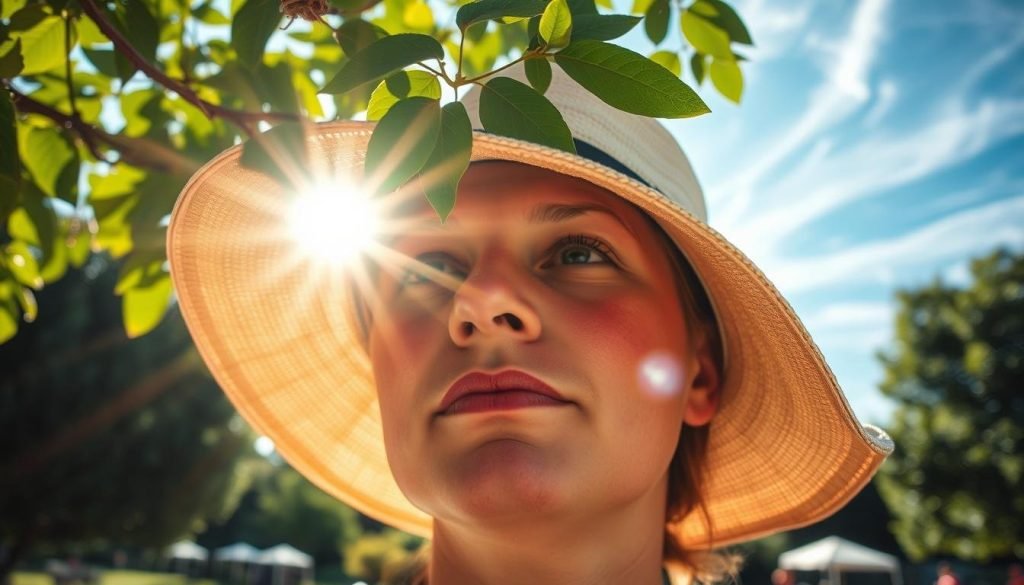
- Choose wide-brimmed hats, seek shade, and avoid midday sun when rays peak.
- Opt for warm, not hot, showers and baths. Sit away from heaters and fireplaces.
- Dress in layers, use fans or air-conditioning, and sip cold water to cool from within.
These steps address core rosacea triggers and support reducing redness in rosacea flare-ups without harsh measures.
Cold Weather Effects
Cold air and wind can dry skin, weaken the barrier, and provoke stinging flares. The rapid move from cold streets to heated rooms also stresses vessels and may trigger flushing.
- Cover cheeks and nose with a silk or acrylic scarf up to beneath the eyes. Skip wool against facial skin.
- Apply a rich emollient and daily SPF, even on cloudy days.
- Limit time outdoors during gusty fronts. Keep a cooling towel for quick resets after temperature swings.
- Follow your prescribed plan from your dermatologist consistently.
Smart layering, gentle fabrics, and steady skincare are practical ways for how to prevent rosacea flare-ups when the wind bites.
| Weather Factor | Common Response | High-Impact Actions | Benefit |
|---|---|---|---|
| Strong Sun (UV) | Rapid flushing, burning | Broad-spectrum SPF 30+ mineral filter; wide-brim hat; shade | Lower UV load, reducing redness in rosacea flare-ups |
| High Heat/Humidity | Persistent warmth, visible redness | Warm (not hot) showers; A/C or fans; cool drinks; layers | Stabilizes skin temperature to curb rosacea triggers |
| Cold Air | Tightness, stinging | Emollient barrier; scarf over face; limit exposure | Shields barrier, easing irritation |
| Wind | Windburn, flare onset | Silk/acrylic facial cover; daily SPF; avoid wool on face | Prevents mechanical irritation and moisture loss |
| Fast Temp Swings | Sudden flushing | Gradual indoor/outdoor transitions; cooling towel | Smoother adjustment, fewer triggers |
Psychological Effects of Rosacea
Visible redness can feel like a spotlight. Many people report worry, embarrassment, or pulling back from social life during Rosacea Flare-ups. With practical rosacea management tips and a plan for identifying rosacea flare-up symptoms early, emotional strain often eases.
Small changes build confidence. Think of a toolkit you can reach for on tough days and during calm periods. Each step supports your mood while also calming skin.
Coping with Self-esteem Issues
Color-correct with green-tinted makeup from brands like Clinique, L’Oréal Paris, and IT Cosmetics to neutralize redness without heavy layers. Keep application light and let moisturizer set first.
Try a gentle daily facial massage. Use clean hands and a fragrance-free cream. Make small circular motions from the center of the face toward the ears for 2–3 minutes. Many find it soothing and grounding.
Stress can nudge Rosacea Flare-ups. Practice box breathing or short guided meditations. These habits, paired with rosacea management tips from your care team, may reduce intensity by helping you notice triggers sooner.
- Quick reset: inhale 4 counts, hold 4, exhale 4, hold 4—repeat three times.
- Carry a cool gel pack for brief relief when identifying rosacea flare-up symptoms on the go.
- Set phone reminders for micro-breaks to lower tension.
Seeking Support
Talking with a licensed counselor can help you process fear, anger, or social anxiety linked to skin changes. Cognitive behavioral strategies offer structure when emotions spike during Rosacea Flare-ups.
Peer communities—such as moderated groups hosted by the National Rosacea Society—provide shared experience, practical rosacea management tips, and a sense that you are not alone.
Ask your dermatologist for referrals to mental health providers familiar with appearance-related stress. Share a brief log when identifying rosacea flare-up symptoms so care teams can align skin and mood strategies.
| Challenge | What Helps | How It Supports You | When to Use |
|---|---|---|---|
| Social anxiety | Green-tinted primer + brief breathing exercise | Neutralizes redness and calms nerves before events | Before meetings, dates, or photos |
| Spike in flushing | Cool gel pack and gentle facial massage | Lowers warmth sensation and provides grounding touch | At first sign of heat or stress |
| Low self-esteem | Counseling and peer support group | Builds skills, perspective, and steady encouragement | Weekly check-ins or during tough periods |
| Trigger confusion | Symptom diary and dermatologist guidance | Clarifies patterns for timely care and clear rosacea management tips | Daily notes; review at appointments |
| Frequent Rosacea Flare-ups | Meditation routine and early-warning checklist | Helps in identifying rosacea flare-up symptoms and acting fast | Morning and evening, plus pre-trigger moments |
The Importance of Sun Protection
UV light often causes redness. Daily protection is key for rosacea flare-ups. Pick formulas that protect without irritation. Wear them every morning.
Think of sunscreen as a calm, breathable shield. It works well with soothing moisturizers and smart habits. This combo helps keep your skin safe all year.
Recommended Sunscreens
Mineral, broad-spectrum SPF 30+ is best for sensitive skin. Look for zinc oxide and titanium dioxide. Also, find silicones like dimethicone or cyclomethicone for smoothness.
- Eucerin Sensitive Mineral Zinc Oxide Protection: gentle, fragrance-free, and reliable for skincare for rosacea flare-ups.
- La Roche-Posay Tinted Mineral: adds sheer tone correction while serving as one of the best products for rosacea flare-ups in sunny months.
Use a plain emollient under SPF to strengthen the skin. This small action can lessen photo-irritation. It helps prevent rosacea flare-ups when the weather changes.
Tips for Application
- Apply a nickel-sized amount to face and neck every morning, even on cloudy days.
- Reapply every two hours outdoors and after swimming or sweating.
- Use after prescription topicals and before makeup to keep actives effective.
- Pair with a wide-brimmed hat, UV-protective sunglasses, shade-seeking, and avoiding midday sun.
- Maintain daily moisturizer to seal hydration and improve tolerance in skincare for rosacea flare-ups.
Make SPF a daily habit, not just for summer. This routine is key to preventing rosacea flare-ups. It keeps you comfortable and active outside.
New Research in Rosacea Treatment
Dermatology research is changing how doctors treat Rosacea Flare-ups. New studies show fast-acting treatments for redness and bumps. They also suggest using devices to help.
Experts say the best treatment mixes medicine, gentle skincare, and avoiding triggers.
Advances in Medical Treatments
Topical vasoconstrictors like brimonidine (Mirvaso) and oxymetazoline (Rhofade) work fast. They reduce facial flushing in hours. But, using them too much can cause more redness.
Anti-inflammatory creams help control redness and bumps. Azelaic acid and metronidazole are good choices. They keep the skin healthy.
For bigger problems, low-dose doxycycline is used. Isotretinoin is for very bad cases, but it’s not safe during pregnancy. Using the right skincare products also helps.
Emerging Therapies
Laser and light treatments are key for tough redness and visible vessels. Pulsed dye and Nd:YAG lasers work better than creams or pills. They take weeks to show results and might need more sessions.
There can be side effects like redness and swelling. Darker skin may also change color. Some insurance covers these treatments, but check first.
What works in the doctor’s office also works at home. Use sunscreen, pick gentle products, and watch how your skin reacts. This way, you can keep your skin calm and reduce flare-ups.
Building a Support Network
Rosacea can make you feel alone, but finding others who understand changes everything. A good network offers practical advice and emotional support during tough times. Many find that talking with others who have rosacea helps them manage their condition better.
Online Communities
Online forums and groups are great for sharing tips and experiences. People swap ideas on avoiding triggers, like using mineral sunscreens and cooling down with towels. They also share diet tips and discuss treatments like topicals and lasers.
These online spaces also focus on stress management. Members talk about deep breathing, meditation, and tai chi to handle stress. Real-life stories help you find effective ways to manage rosacea.
Local Support Groups
Local groups offer a chance to connect face-to-face. They encourage keeping a symptom diary and using sunscreen every day. They also teach ways to cool down during workouts to prevent flushing.
Dermatologists can help you find good groups and tailor treatments. Combining medical advice with support from others can make managing rosacea easier. It can also make treatments more effective over time.
FAQ
How can I manage Rosacea Flare-ups day to day?
Start with a gentle, consistent routine. Cleanse twice daily with a nonsoap cleanser. Moisturize with fragrance-free products and apply a broad-spectrum SPF 30+ mineral sunscreen.
Track rosacea triggers like sun, heat, wind, spicy foods, alcohol, hot beverages, stress, and new medications or supplements. Use cooling tactics during exercise and choose breathable layers.
Consider prescription or over-the-counter treatments tailored to flushing or bumps. These tips help reduce flare-ups.
What is Rosacea?
Rosacea is a chronic inflammatory skin condition that mainly affects the central face. It causes episodic flares of redness, sensitivity, and sometimes acne-like bumps.
Diagnosis is based on a clinician’s visual exam and symptom history. Tests may be ordered to rule out look-alike conditions like psoriasis or lupus. Eye symptoms should be assessed by an ophthalmologist.
What are common symptoms of Rosacea Flare-ups?
Symptoms include flushing, persistent redness, visible blood vessels, stinging or burning, swelling, and acne-like papules and pustules. On brown and Black skin, flushing and spider veins may be harder to see.
Stinging, swelling, bumps, and dry-looking skin are key clues. Identifying symptoms early helps guide treatment.
What types of rosacea are there?
Types present differently. Vascular-predominant rosacea features flushing and visible vessels, often helped by brimonidine or oxymetazoline.
Papulopustular rosacea shows bumps and pimples that respond to azelaic acid, metronidazole, ivermectin, or oral doxycycline. Persistent vessels and redness may benefit from laser therapy; discuss timing and skin tone considerations with a clinician.
Which environmental factors trigger Rosacea Flare-ups?
Sun and heat are top triggers, along with hot baths or showers, fireplaces, heaters, wind, and cold. Plan for shade, wear wide-brimmed hats, and use SPF 30+ mineral sunscreens.
Cover the face in cold, windy weather with silk or acrylic scarves, and limit outdoor exposure during extremes.
How do foods and drinks affect rosacea triggers?
The heat of hot beverages can provoke flushing. Alcohol—-especialy red wine—and spicy foods are common triggers. Practical swaps include iced or lukewarm drinks, choosing white wine or diluting alcohol, limiting to 1–2 drinks with water between, and opting for milder spices.
Discuss vitamin B3 (niacin) supplements with a clinician if flares occur.
Can stress and emotions cause flare-ups?
Yes. Stress can heighten neurovascular reactivity, increasing flushing. Daily stress management—deep breathing, meditation, tai chi, brief movement breaks, and enjoyable activities—helps stabilize responses.
Building a routine improves resilience and reduces flare frequency.
What does a gentle cleansing routine look like?
Cleanse morning and night with a nonsoap, fragrance-free cleanser. Avoid scrubs, astringents, and rubbing. Skip irritants like alcohol, menthol, camphor, urea, and sodium lauryl sulfate.
Pat dry and apply moisturizer while skin is slightly damp to lock in hydration.
How should I hydrate and moisturize sensitive, rosacea-prone skin?
Use fragrance-free moisturizers with barrier-supportive textures, often silicone-based (dimethicone, cyclomethicone). Niacinamide and azelaic acid in some creams may reduce redness.
Apply an emollient before makeup to minimize friction and improve comfort during Rosacea Flare-ups.
What sunscreen is best for reducing redness in rosacea flare-ups?
Choose broad-spectrum SPF 30+ mineral sunscreens with zinc oxide and/or titanium dioxide. These are less likely to irritate and can calm sensitive skin.
Apply every morning, reapply every two hours outdoors, and pair with hats and shade. Good examples include Eucerin Sensitive Mineral Zinc Oxide Protection and La Roche-Posay Tinted Mineral.
How can I identify my personal rosacea triggers?
Keep a symptom diary. Track sun, heat, wind, cold, stress level, foods and drinks, exercise intensity, skincare and hair products, and new medicines or supplements.
Note timing and severity of flushing, burning, bumps, swelling, and eye symptoms. Patterns often emerge within weeks.
When should I consult a dermatologist?
Seek care if symptoms persist despite careful skincare and trigger avoidance, if you develop eye irritation, or if redness, bumps, and flushing worsen.
Dermatologists can confirm diagnosis, rule out psoriasis or lupus, suggest alternatives to medicines that may worsen flushing, and build a tailored treatment plan.
What prescription options treat rosacea flare-ups?
For flushing: brimonidine (Mirvaso) and oxymetazoline (Rhofade) can reduce redness within hours, though effects are temporary and overuse may trigger rebound flushing.
For bumps: azelaic acid (Azelex, Finacea), metronidazole (Metrogel, Noritate), and ivermectin (Soolantra) help over weeks. Oral doxycycline treats more serious inflammation; isotretinoin is reserved for severe, refractory cases and is contraindicated during pregnancy.
Which over-the-counter solutions help with rosacea management?
Look for gentle, fragrance-free cleansers and moisturizers. Some face creams with azelaic acid, dicarboxylic acids, or niacinamide may help reduce redness.
Green-tinted makeup can visually neutralize redness; avoid alcohol-based gels or thin lotions that sting.
What diet modifications help prevent Rosacea Flare-ups?
Cool down beverages, moderate alcohol with a preference for white wine or diluted options, limit to 1–2 drinks with water between, and choose milder spices.
Review supplements like niacin with your clinician. Pair diet changes with sun and heat avoidance for better control.
Which stress management techniques are most effective?
Simple daily practices work well: paced breathing, meditation, tai chi or yoga, brief outdoor walks, and restful sleep routines.
These lower stress-driven flushing and improve tolerance to common triggers.
When are persistent symptoms a red flag?
Ongoing, frequent, or intense flushing, increasing redness, new or worsening bumps, swelling, pain or stinging, and any eye irritation warrant professional evaluation.
Early intervention prevents progression and improves comfort.
How do I know if I need prescription options?
If gentle skincare and trigger control fail to control flares within several weeks, or if symptoms interfere with daily life, discuss prescription topicals or oral therapies with a dermatologist.
They can also advise on laser therapy for persistent vessels.
What home remedies offer fast relief during a flare?
Use cold compresses: wrap a cool, damp cloth around the neck or apply brief cool packs to affected areas. Sip a cold drink and move to an air-conditioned or shaded space.
These steps rapidly reduce heat and swelling.
Are there natural soothing ingredients for Rosacea Flare-ups?
Mineral sunscreens with zinc oxide and titanium dioxide are calming and protective. Silicone-based moisturizers (dimethicone, cyclomethicone) support the barrier and reduce friction.
Always avoid alcohol-heavy or fragranced products that can sting.
Which foods and drinks should I avoid for better rosacea control?
Common culprits include hot-temperature beverages, red wine, and spicy foods. Some people flare with niacin-containing supplements.
Cooling drinks, alcohol moderation, and milder spices are practical swaps that lower risk.
Are there specific foods that benefit rosacea-prone skin?
While no single diet cures rosacea, staying hydrated and choosing less spicy, lower-temperature foods helps prevent triggers.
A balanced, gentle-on-the-stomach diet supports overall skin comfort alongside consistent treatment.
Why are sun and heat such strong rosacea triggers?
Sunlight and heat dilate facial blood vessels, leading to flushing and persistent redness. Limit midday sun, wear wide-brimmed hats, seek shade, use fans or air-conditioning, and apply SPF 30+ mineral sunscreen daily to reduce risk.
How does cold weather affect Rosacea Flare-ups?
Wind and cold can cause windburn and trigger flares. Protect skin with silk or acrylic scarves, avoid wool on the face, use daily emollients and sunscreen, and limit exposure during harsh conditions.
How can rosacea impact mental health and self-esteem?
Visible redness and flares can cause embarrassment or anxiety. Coping strategies include green-tinted makeup, gentle facial massage, and stress-reduction practices.
Counseling and peer support often improve confidence and adherence to care.
Where can I find support for managing rosacea triggers?
Online communities and local support groups offer practical tips on skincare for rosacea flare-ups, reducing redness in rosacea flare-ups, product recommendations, and encouragement to maintain symptom diaries and routines.
Dermatologists can suggest reputable groups.
What are the best sunscreens for rosacea-prone skin?
Fragrance-free, broad-spectrum SPF 30+ mineral sunscreens with zinc oxide and/or titanium dioxide are preferred. Examples include Eucerin Sensitive Mineral Zinc Oxide Protection and La Roche-Posay Tinted Mineral.
Look for silky, silicone-based textures for comfort.
Any tips for applying sunscreen to sensitive skin?
Apply generously every morning after prescription topicals and before makeup. Reapply every two hours outdoors and after sweating or swimming.
Pair with hats, shade, and protective clothing for complete coverage.
What advances in medical treatments should I know about?
Vasoconstrictor topicals like brimonidine and oxymetazoline can reduce flushing within hours. Anti-inflammatory topicals—azelaic acid, metronidazole, ivermectin—offer varying onset and durability.
Doxyycycline treats inflammatory lesions; isotretinoin is reserved for severe, refractory cases and is contraindicated during pregnancy. Laser therapy can target visible vessels and persistent redness.
Are there emerging therapies for rosacea?
Dermatology guidance emphasizes combining trigger control with targeted medical therapy for durable results. Laser and light devices continue to evolve, though effectiveness and pigmentary risk vary by skin tone.
Insurance coverage for procedures is variable; confirm with your plan.
How can online communities help with treating rosacea flare-ups?
They offer peer-tested advice on how to prevent rosacea flare-ups, rosacea flare-up remedies, and best products for rosacea flare-ups. Members share routines, discuss prescription experiences, and provide support to stay consistent with care.
What role do local support groups play?
In-person groups provide accountability and encouragement to track triggers, practice cooling strategies during exercise, refine skincare, and follow treatment plans.
Many find that community support improves adherence and outcomes over time.
Schedule your appointment with Dr. Khanna